
 EN
EN
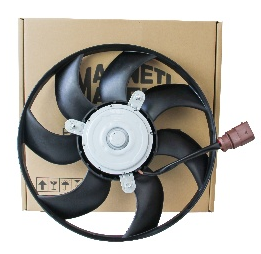
Understanding CFM, Static Pressure, and System Operating Point
CFM and Airflow Requirements for Effective Radiator Cooling in High-Heat Environments
Getting proper radiator cooling when temperatures soar really depends on managing airflow just right. CFM stands for Cubic Feet per Minute, basically telling us how much air moves through the system each minute. This number is super important because it determines whether the heat gets properly dissipated from components. When we're talking about places where temps go above 120 degrees Fahrenheit, things get serious fast. If there isn't enough airflow moving through the radiators, the whole system can experience what's called thermal runaway. What happens then? Well, the efficiency of transferring heat drops off dramatically, sometimes as much as forty percent. To figure out exactly how much CFM is needed, technicians typically look at two main factors: the total heat generated by equipment and the difference between incoming and outgoing air temperatures.
- Heat load = Equipment wattage ÷ 3.41 (BTU conversion)
-
Minimum CFM = Total BTU ÷ (ΔT × 1.08)
For example, a 50kW generator at 30°F ΔT needs ~1,850 CFM. Undersized airflow increases component temperatures by 15–25°F per 10% CFM deficit, accelerating failure rates.
Balancing Static Pressure and Airflow in Dense Radiator Cores
Dense fin stacks create airflow resistance measured as static pressure (inches H₂O). High-static-pressure fans maintain consistent CFM against resistance—vital for compact radiators with 16+ FPI (fins per inch). Consider:
| Factor | Low Resistance | High Resistance |
|---|---|---|
| Fin density | <12 FPI | >16 FPI |
| Ideal fan type | Axial | Centrifugal |
| Static pressure range | 0.1–0.3" H₂O | 0.4–1.0" H₂O |
| Exceeding a fan’s static pressure capacity drops CFM exponentially. A 0.5" H₂O increase can reduce airflow by 35% in axial fans, while backward-curved centrifugals sustain 90% CFM up to 0.8" H₂O. |
Using Fan Performance Curves to Match the System Resistance Curve
Fan performance curves plot CFM against static pressure at given RPMs. The system curve represents your radiator’s airflow resistance. Their intersection determines the operating point—where actual airflow meets system demand. To optimize:
- Plot your system curve using calculated static pressure at multiple CFM values
- Overlay manufacturer fan curves
- Select fans where curves intersect near peak efficiency (BEP)
Operating left of BEP causes turbulence and motor overload; right of BEP reduces airflow. Matching curves within 10% of BEP cuts energy use by 18–22% while preventing stall conditions in high-heat scenarios.
High-Temperature Materials and Mechanical Design for Radiator Fan Durability
Heat-Resistant Materials: Plastics, Alloys, and IP68 Sealing for Harsh Environments
When radiator fans run hotter than 200 degrees Celsius, they need special materials that won't fall apart from all that heat. For parts exposed to extreme temperatures, engineers often turn to high temp plastics such as PEEK, which stands for Polyether Ether Ketone. These plastics hold their shape even when things get really hot and don't break down chemically over time. Meanwhile, components near exhaust systems typically use nickel based alloys because regular metals would just rust away too quickly. The seals are another important consideration too. They must meet IP68 protection levels against water and dust getting inside where they shouldn't be. Dust buildup combined with moisture is a recipe for early part failures. So picking the right materials isn't just about meeting specs it's actually what keeps these systems running properly for years instead of months.
- Thermal stability prevents warping at extreme temperatures
- Oxidation resistance reduces surface degradation in humid conditions
- Sealed bearings prevent lubricant contamination from particulate matter
Optimal Fan Blade Geometry: Radial vs. Forward-Curved for High-Temp Performance
Blade design significantly influences radiator fan performance in high-heat scenarios. Radial blades excel in high-static-pressure environments common in compact radiators, maintaining efficiency despite thermal expansion. Forward-curved designs move higher air volumes but risk deformation above 150°C. Key considerations include:
- Thermal expansion tolerance: Radial designs accommodate metal fatigue better
- Tip clearance management: Maintains efficiency as housings expand
- Aerodynamic stress distribution: Reduces vibration-induced bearing wear
Material selection and mechanical design form the foundation for reliable operation in demanding thermal environments. Proper implementation prevents premature failure modes like blade cracking or bearing seizure.
Bearing Systems and Lubrication Strategies for Long-Term Reliability
High-Temperature Bearings and Lubrication: Preventing Seizure and Wear
When it comes to radiator fans operating in really hot conditions, they need bearings that can handle the heat. According to Plant Automation Technology, more than half of all bearing failures in industry actually come down to problems with lubrication. For these tough applications, manufacturers turn to high temperature bearings made from special alloys or even ceramics. These materials work best when combined with synthetic lubricants designed to function above 300 degrees Celsius. The real benefit? These advanced lubricants create much less direct contact between metal parts, cutting friction levels by around two thirds compared to regular oil products. This makes a huge difference in equipment longevity and maintenance costs over time.
- Solid lubricants (e.g., PTFE coatings) for reduced maintenance in sealed systems
- Self-lubricating designs with micro-reservoirs for consistent oil film retention
- Oxidation-resistant greases that maintain viscosity under thermal cycling
Proper lubrication intervals prevent seizure and abrasive wear, extending bearing life by 3–5× in extreme conditions.
Active and Passive Cooling Techniques to Protect Bearing Assemblies
Effective thermal management shields bearings from radiator exhaust heat. Passive methods include:
- Aluminum heat sinks that dissipate 40% more heat than steel
- Thermal barrier coatings reflecting radiant energy
- Strategic placement away from direct exhaust paths
Active cooling integrates auxiliary micro-fans or air ducts channeling cool airflow to bearing housings. These reduce operating temperatures by 70–100°C, preventing lubricant breakdown. Hybrid approaches combine phase-change materials with vented enclosures for reliability in sustained 150°C+ environments.