
 EN
EN
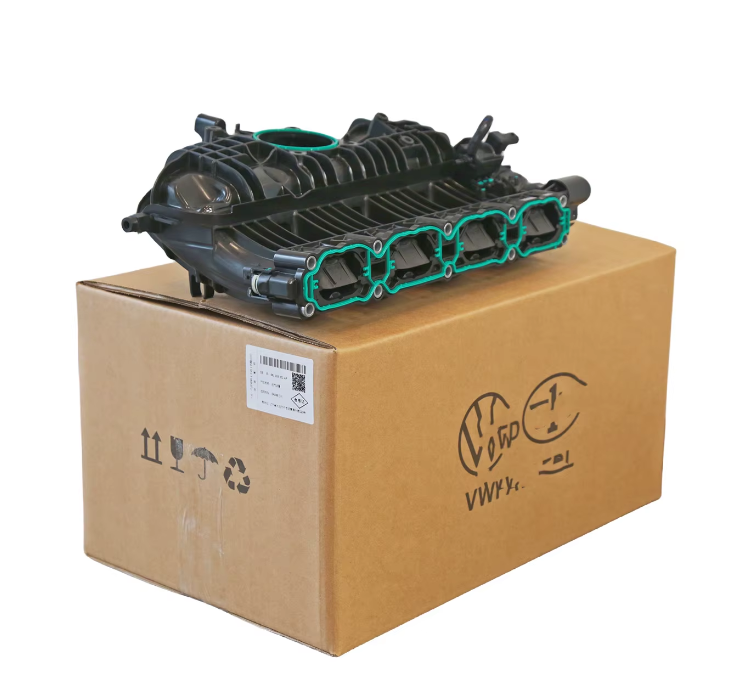
Key Symptoms Indicating Intake Manifold Failure
Rough Idle, Hissing Noises, and Lean Codes (P0171/P0174) from Vacuum Leaks
When an intake manifold starts going bad, drivers usually notice a rough or uneven idle that can climb well above normal levels, sometimes jumping over 250 rpm from what's typical. The main culprit here tends to be vacuum leaks somewhere in the system. These leaks let extra air sneak into the intake, which creates that annoying hissing sound around the engine area and messes up the carefully balanced air-fuel mixture. As a consequence, the oxygen sensors pick up on this imbalance and start throwing out warning signals like code P0171 for Bank 1 or P0174 for Bank 2. Mechanics often see these codes alongside fuel trim readings that creep past +10%. Cracked plastic components or worn out gaskets are common sources of these leaks. Whatever the root cause might be, the car's computer responds by pumping in more fuel than needed, which not only wears down the catalytic converter faster but also means more harmful stuff coming out of the exhaust pipe.
Coolant Leaks, Overheating, and Sweet-Smelling Exhaust from Internal Gasket Failure
When the internal gasket fails, coolant starts leaking out through the intake manifold passages. Mechanics usually spot this when they see puddles forming underneath vehicles or notice the coolant reservoir level going down over time. The problem gets worse as coolant works its way into combustion chambers or oil galleries, which makes engines run hotter than normal and causes overheating issues more frequently. One sign that stands out is the sweet smell resembling maple syrup coming from the exhaust pipe. That happens because ethylene glycol is vaporizing, and it's definitely a warning sign something's wrong inside. If nothing gets fixed, there's a serious risk of hydrolock where coolant actually enters the engine cylinders during compression strokes, potentially causing major damage to the entire powertrain. Most experienced technicians will perform cooling system pressure tests to diagnose these problems early. They know that once coolant mixes with engine oil, it thins out the oil's viscosity quite quickly, sometimes within only 500 miles after the leak first appears.
Engine Misfires, Stalling, and Acceleration Hesitation Due to Air/Fuel Imbalance
When there are cracks, warped areas, or worn out gaskets in an intake manifold, it messes with how air gets distributed to each cylinder. That's why drivers often notice those annoying random misfires when they're driving under heavier loads. The problem doesn't stop there either. These issues mess up vacuum systems throughout the car too, which explains why some vehicles stall when idling or running at low RPMs. Most folks who bring their cars in for service mention throttle lag and poor acceleration performance. Usually this happens because the mass airflow sensor is getting confused by all the chaotic air movement coming into the engine. What's interesting is how the car's computer responds to all this chaos. Sometimes it will actually shut off fuel injectors briefly while shifting gears or climbing hills. And don't be surprised if you see black smoke coming out of the tailpipe right after starting a cold engine. This happens because certain parts of the engine run richer than others as they try to compensate for the overall lean mixture condition.
Accurate Diagnosis of Intake Manifold Issues
Interpreting OBD-II Data: Fuel Trims, Freeze Frame, and Intake-Specific DTCs (e.g., P2004, P2015)
Looking at OBD-II readings gives us valuable clues about how healthy an intake manifold actually is. When we see long term fuel trims consistently going beyond plus or minus 10%, that's usually a red flag for unmetered air getting in somewhere it shouldn't be. Most often this happens because of vacuum leaks around the manifold area. The best proof comes from specific diagnostic trouble codes related to the intake system. Code P2004 means the intake manifold runner control is stuck in the open position, whereas code P2015 tells us there's something wrong with the runner position sensor itself. Freeze frame data records all those important numbers like RPM, engine load and temperature exactly when the problem happened. Technicians can then recreate issues such as the car hesitating when accelerating, making it much easier to track down what's really causing the trouble underneath the hood.
Physical Leak Detection: Smoke Testing vs. Carb Cleaner Method for Vacuum and Coolant Path Integrity
Two proven methods verify physical integrity:
- Smoke testing: Introduces non-toxic, visible vapor at low pressure (0.5–1 PSI) to safely and accurately locate vacuum leaks—even micro-fractures in composite manifolds. It's widely regarded as the gold standard for external leak detection.
- Carb cleaner method: Spraying carburetor cleaner near suspected areas while monitoring idle RPM can reveal leaks via transient RPM increases—but poses fire risk near hot exhaust components and offers no insight into internal coolant passage integrity.
For suspected internal coolant leaks, pressurizing the cooling system to 15–20 PSI identifies gasket breaches before contamination occurs. Aluminum manifolds also require flatness verification: warpage exceeding 0.004" across sealing surfaces risks repeat gasket failure.
Intake Manifold Replacement vs. Repair: Knowing When It's Necessary
Structural Failures: Cracked Aluminum, Warping, or Corrosion That Compromise Intake Manifold Integrity
Aluminum manifolds tend to crack, warp from heat exposure, or suffer corrosion inside coolant channels these are all serious structural problems that just can't be fixed properly. When this kind of damage happens, it leads to constant air leaks through the system sometimes as much as 20% airflow gets lost which really messes with the engine's vacuum stability. Most weld jobs don't work out because they never match the original thermal properties, and usually give way again after about six to twelve months service time. The same goes for surface corrosion issues once it eats through coolant jackets or affects those EGR integrated passages, there's no stopping the mixing of coolant, motor oil, and exhaust gases anymore. At some point, replacement becomes the only viable option for keeping the engine running safely and efficiently.
- Cracks exceed 2 mm in width or intersect primary sealing surfaces
- Warpage exceeds OEM flatness tolerances (typically >0.3 mm)
- Corrosion has perforated coolant passages or created pathways between fluid systems
Industry surveys show 92% of experienced technicians recommend replacement over repair for these conditions—favoring OEM or certified aftermarket units to ensure dimensional accuracy, material integrity, and long-term reliability.
FAQ Section
What are common symptoms of an intake manifold failure?
Common symptoms include rough idle, hissing noises, lean codes (P0171/P0174), coolant leaks, overheating, sweet-smelling exhaust, engine misfires, stalling, and acceleration hesitation.
How can I diagnose intake manifold issues?
You can diagnose issues by checking OBD-II data for fuel trims and specific diagnostic trouble codes, as well as using physical leak detection methods like smoke testing and the carb cleaner method.
When should I replace my intake manifold instead of repairing it?
Replacement is recommended when there are structural failures like cracked aluminum, significant warping, or corrosion that compromise manifold integrity. In such cases, repairs are often insufficient.