
 EN
EN
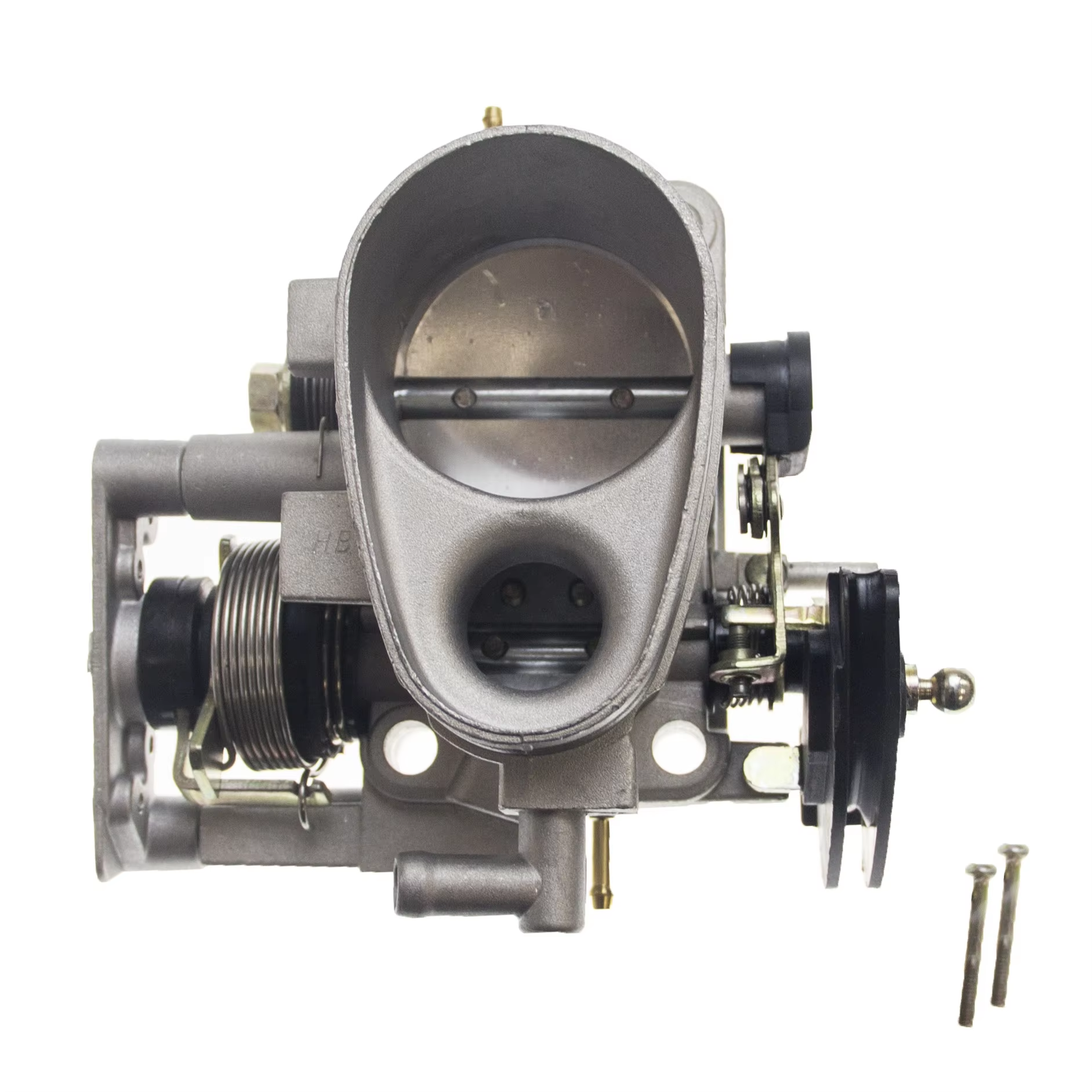
Quomodo Inspectare Mala Functionis Corporis Acceleratoris?
A malfunction of the throttle body seldom yields a single, unambiguous fault code. Instead, the ECU records correlation errors between commanded and actual throttle position, torque reduction requests, and sometimes seemingly unrelated codes—for instance, for mass airflow or oxygen sensor faults—which are actually downstream consequences of incorrect air metering. A systematic inspection that isolates the throttle body from the ECU, wiring, and sensor systems prevents replacement of a fully functional component.
Step One: Read the Codes, But Do Not Trust Them Blindly
The most common throttle body malfunction codes are P0121 (throttle position sensor A circuit range/performance), P0122 (low input), P0123 (high input), P0221 (sensor B range/performance), and P0638 (throttle actuator control range/performance). These codes confirm a correlation problem between commanded and reported throttle positions—they do not confirm that the throttle body itself is at fault.
Antequam corpus valvulae acceleratricis condemnatur, data congelata cum codice servata inspicienda sunt. Si codex in statu quietis cum temperatura motoris ad 85°C constitutus est et positio valvulae acceleratricis reperta 18% est, dum in statu quietis 3–5% esse debet, lamina valvulae acceleratricis partim aperta haeret—haec res mechanica per data confirmatur. Si codex in velocitate viarum magnarum constitutus est et positio valvulae acceleratricis reperta est saltare ab 35% ad 0% et rursus ad 40% intra 0,5 secundum, causa magis probabiliter electrica est—sensor positionis deficiens aut connexio electrica intermitens.
Gradus Secundus: Analysis Data Viventium
Conecta un instrumentum diagnosticum capax graphici dati vivi et observa tensionem sensoris positionis valvulae throttle cum ignitio activata (motor inactivus). Premere lentissime pedalem acceleratoris ab 0% ad 100% et rursus. Tensio Sensoris A debet crescare uniformiter ab approximative 0.5V ad valvulam clausam ad approximative 4.5V ad valvulam apertissimam. Sensor B typice operatur in curva inversa—incipiens alta et decrescens—ut controllo redundans. Quaelibet subita interruptio tensionis, loca plana ubi tensio non mutatur ultra 0.5 secundum, aut discrepantia inter sensorem A et B maior quam 0.1V indicat valvulam throttle defectuosam.
Current draw of the throttle actuator tells another story. At idle with engine running, the throttle motor holds the plate at the commanded position via continuous small adjustments against the return spring. Normal idle current draw is 0.3–0.8 amp. A throttle body with carbon buildup draws higher current—1.0–1.8 amp—because the motor works against physical resistance. Current draw above 2.0 amp at idle indicates the motor is near its stall limit and the throttle body needs cleaning or replacement.
Step Three: Visual and Mechanical Inspection
Remove the intake duct and inspect the throttle plate and bore with a flashlight. Carbon deposits accumulate most heavily on the back of the throttle plate and the bore wall directly behind it, where crankcase ventilation gases enter the intake stream. Light tan deposits covering less than 20% of the bore circumference are normal for engines with 60,000–100,000 km. Black, wet deposits exceeding 50% coverage, particularly deposits that physically touch the throttle plate edge and prevent it from closing to its designed idle gap, are causing the malfunction regardless of what the scan tool reports.
Cum ignitio exst, laminam acceleratricem manu aperire oportet digito puro. Laminam per totum suum ambitum moveri debet leniter, cum constanti resistentia a mola, et firmiter claudi, cum dimittitur. Sensus asper, haesio in quocumque puncto ambitus, aut lamina quae semipatens manet post dimissionem, defectum mechanicum confirmant. Numquam laminam acceleratricem vi aperire oportet in motore ubi ignitio est activa—motor electronicus positionem tenet et vis contra impulsum motoris dentes plasticos reductoris frangere potest.
Gradus Quartus: Inspectio Connexorum et Filorum
Conector corporis valvulae acceleratricis transmittit tensionem referentiam 5V, terram sensoris, duo filia reditus signali (sensoribus A et B), et duo filia impulsum motoris. Perfora conectorum retro cum ignitio activata: tensio referentiae inter pinum 5V et terram debet esse constans 4,9–5,1V. Tensio referentiae infra 4,8V aut fluctuans plus quam ±0,1V indicat defectum in circuitu referentiae 5V ECU aut cortocircuitum ad terram alibi in circuitu referentiae, qui cum sensore pedalis acceleratricis et aliis sensoribus motoris communis est.
Examinatio continuitatis uniuscuiusque filii ab conectori corporis valvulae acceleratricis ad conectorem ECU, cum utriusque extremi conectorum disiunctis, identificat interruptiones fasciculi filiorum. Resistentia supra 1 ohm in unoquoque filio indicat defectum incipientem—typice in puncto flexionis ubi fasciculus flectitur durante motu motoris.
Casus: Diagnose idle irregularis salvat substitutionem superfluam
An Audi with a P0121 code and an idle that oscillated between 700 and 1,100 RPM was diagnosed by a workshop as needing a throttle body replacement. Before authorizing the repair, the owner's independent diagnostic check revealed that the throttle position sensor sweep was smooth in live data, but the reference voltage at the throttle body connector was oscillating between 4.7V and 5.1V. The fault was traced to a partially broken wire in the engine harness approximately 15cm from the throttle body connector. A wire repair costing the equivalent of 30 resolved the issue that was quoted for a 350 throttle body replacement. The throttle body itself, supplied by an aftermarket manufacturer like Sakes Auto Parts, would have been perfectly functional but unnecessary.
Questiones Frecventer Interrogatae
Can a dirty throttle body cause a malfunction code?
Yes. Carbon buildup that prevents the throttle plate from reaching its fully closed idle position causes the ECU to detect a correlation error between commanded idle position and actual position. Cleaning the throttle body often resolves the code without component replacement.
How can a technician distinguish between a sensor fault and a throttle body motor fault?
A sensor fault produces position signal errors without changes in motor current draw. A motor fault produces increased current draw and may be accompanied by mechanical noise from the gear drive. Live data graphing of both position and current, simultaneously, reveals which system is failing.
Will disconnecting the battery reset throttle body adaptation?
Disconecting the battery clears the ECU's learned throttle body closed-position value. On many vehicles, the ECU relearns this during the next drive cycle. On others—particularly VW/Audi—a scan tool adaptation must be performed after battery reconnection to restore proper idle control.
How frequently should throttle body inspection be performed?
Inspection should accompany every major service interval (30,000–50,000 km) on direct-injection engines, which are more prone to carbon buildup. Port-injected engines can extend inspection intervals to 60,000–80,000 km.
Can a throttle body malfunction cause transmission shifting problems?
Yes. The transmission control module uses throttle position data to determine shift points and line pressure. An erratic throttle position signal causes harsh or delayed shifts that appear to be a transmission problem but are actually a throttle body sensor fault.
Where can technicians source reliable replacement throttle bodies?
Fornitores de peças de reposição de qualitate OE, como Sakes Auto Parts, fornisce corpos de acelerador fabricados segundo as especificações de fábrica para VW, Audi e outras aplicações europeas. As suas unidades incluunt a configuração correcta do conector, a calibração do sensor e a junta para montagem directa.