
 EN
EN
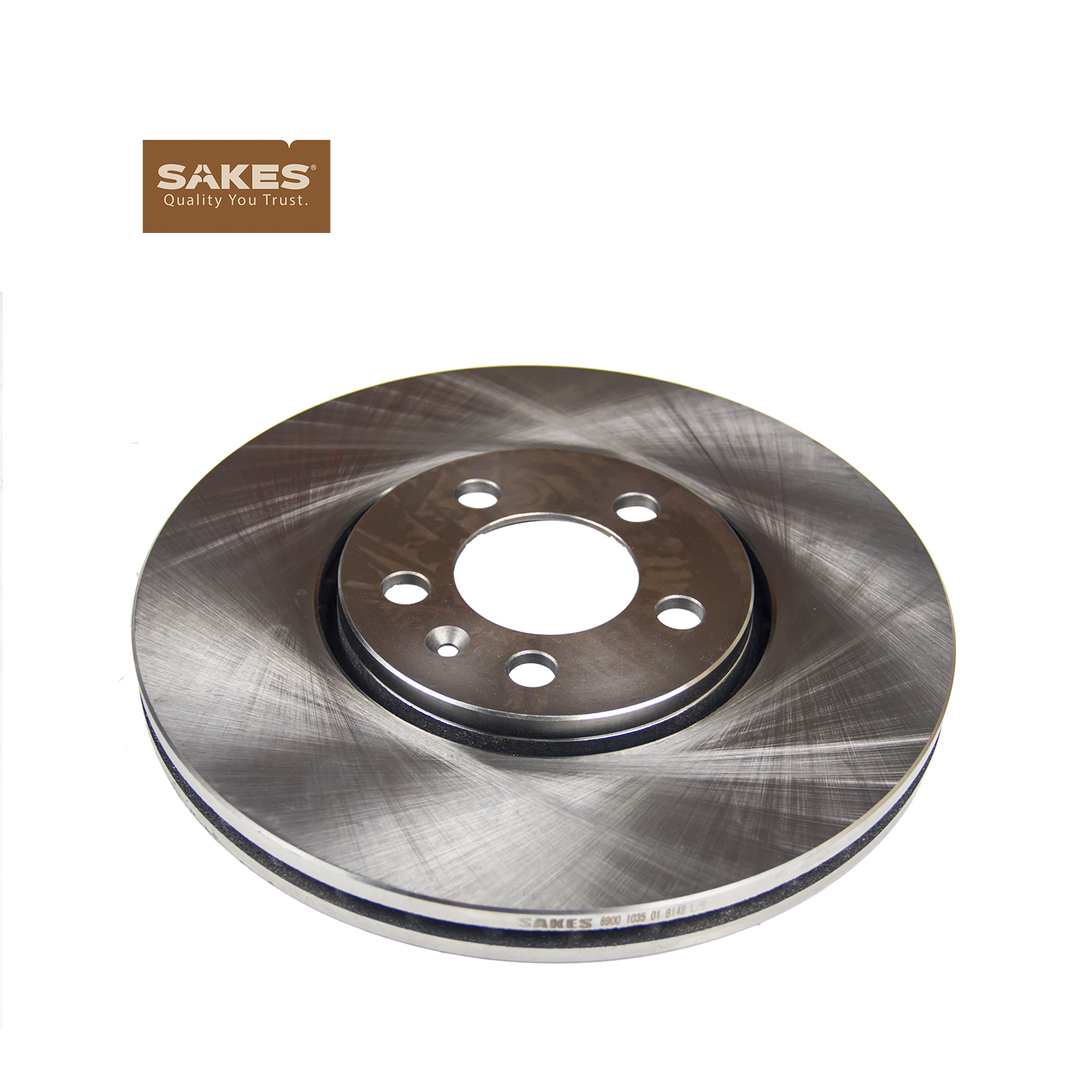
Understanding Brake Disc Wear and When to Replace Them
Mileage-Based Recommendations and Key Variables
Under normal driving conditions, brake discs last between 50,000 and 70,000 miles. This can change for several reasons:
Driving habits: Braking aggressively and driving in heavy stop-and-go traffic can wear discs 30 to 40% faster from heating up more.
Vehicle load: Driving with a heavier load increases stress on the brakes; discs on a commercial vehicle may last up to 50% less time.
Environmental exposure: Road salt, moisture, and abrasive materials can cause corrosion and wear the surface of the discs.
Component quality: Bad brake pads can wear out discs faster and cause discs to warp.
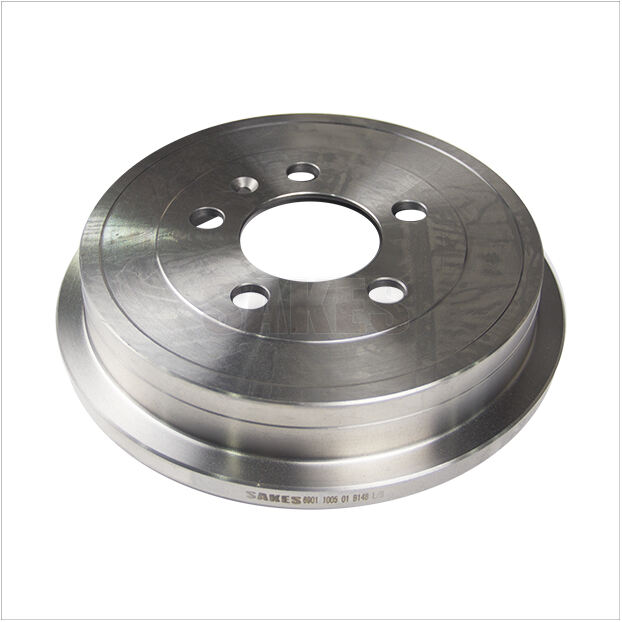
The Effect of Brake Pad Condition on Brake Disc Lifespan
The quality of brake pads is the most important element for controlling how long brake discs will last. Brake pads thinner than 3mm will expose metal backing plates and make direct contact with the disc. This will wear brake discs 60% faster whilst also causing grooves or spots. Worn pads can also cause an imbalance in the calipers which can lead the brake discs to warp and vibrate. To avoid this, brake pads should be replaced when they reach 4 or 5mm. This avoids damage to the brake disc, maintains the brake disc function, and can save money on future repairs. The best way to increase the lifespan of brake discs is to maintain the pads regularly.
Visual and Physical Inspection Criteria for Brake Discs
Identifying Grooves, Scoring, Cracks, and Warping
Visual inspections during routine services help identify early failures. Scoring and grooves appear as scratches on the friction surface and often occur with embedded debris. Cracks that start at the cooling vanes or at the outer edge of the brake disc become a serious failure risk, as they have already started a thermal fatigue failure. Warping occurs with a distorted disc surface and often results in pedal pulsation and steering wheel vibration. Warping and a localized area of braking disc failure can be seen with a blue spot. Disc surface rust is common, and a disc surface that has a rust layer that is starting to flake during braking can be a braking issue. Damage often occurs on the inner diameter of the braking disc, and the side of the disc that is less visible should be inspected.
Measuring Thickness Against Manufacturer Minimum Specifications
Disc thickness is important for a brake disc’s ability to dissipate heat and for the structural integrity of the disc. Measurements should be taken 8-12 times across a brake disc. These measurements should be taken with a micrometer, and grooves should be avoided. Manufacturer specifications and minimum thicknesses are usually located on the disc. A common starting thickness is 28mm, and the stopping thickness is 26mm. Discs at or below the minimum thickness become dangerous, due to the possibility of dimensional failure (i.e. warping and cracking) and failure from extreme thermal loading. Disc f rictions should be replaced at the same time as the brake pads.
Signs That Indicate Brake Disc Replacement Are Due
Vibrating Steering Wheel and Brake Pedal
When the steering wheel shakes while slowing and the brake pedal feels bumpy when pressed, the brake discs are either uneven or warped. This can cause stopping to take longer as the brakes can’t perform the function of stopping the vehicle as the friction is inconsistent. It is particularly dangerous in rainy weather as the distance of the vehicle can increase by a factor of 40 as the breaks fail to operate at full efficiency. Unlike worn brake pads, which can cause the driver to feel little to no vibration, issues with the rotors cause the driver to feel a rhythm that correlates with the speed of the vehicle and the brake system. In a study of ASE certified technicians, the top 65% of brake system vibrations were due to issues with rotors and not with pads. The brake pedal losing its pressure is also a strong indication that the brake pedal needs to be pressed with force to build pressure.
Increased Stopping Distance and Grinding Noises
If the braking system is grinding, the friction pads have completely worn down to the metal and the caliper is now touching the brake disc directly. Again, this contact will affect the rotors and can extend the distance the vehicle can come to a stop by 50%. At highway speeds, the distance the vehicle can come to a stop can extend by 2.3 seconds. This will greatly increase the chances of colliding with another vehicle. In addition to the heat generated, this will also cause the brake system to fail due to a loss of pressure to the brake system. Ignoring issues with the braking system will extremely increase the chances of a collision.
Choosing Between Resurfacing or Replacing Brake Discs
For minor issues like light scoring or minor runout, resurfacing a brake disc can be a good choice. Resurfacing can be done when the brake disc is still above the minimum thickness and still has material. The minimum thickness of a brake disc is typically stamped on the brake disc. Resurfacing can be an inexpensive option for restoring manufacturers standards, as a resurfaced brake disc can cost 30-50% less than a new brake disc. Resurfacing can be a poor option if the brake disc has deep grooves, cracking, or warping as well as a disc that is nearing the minimum thickness. Routinely checking brake discs is important to avoid ailments such as brake caliper and brake disc seizing, leaking brake fluid, and poor brake function. If resurfacing cannot be done, or if the minimum thickness cannot be assured, a brake disc replacement is the only option. Replacing a brake disc provides good, safe, and predictable brake function and prevents cascading failures in other brake system components.
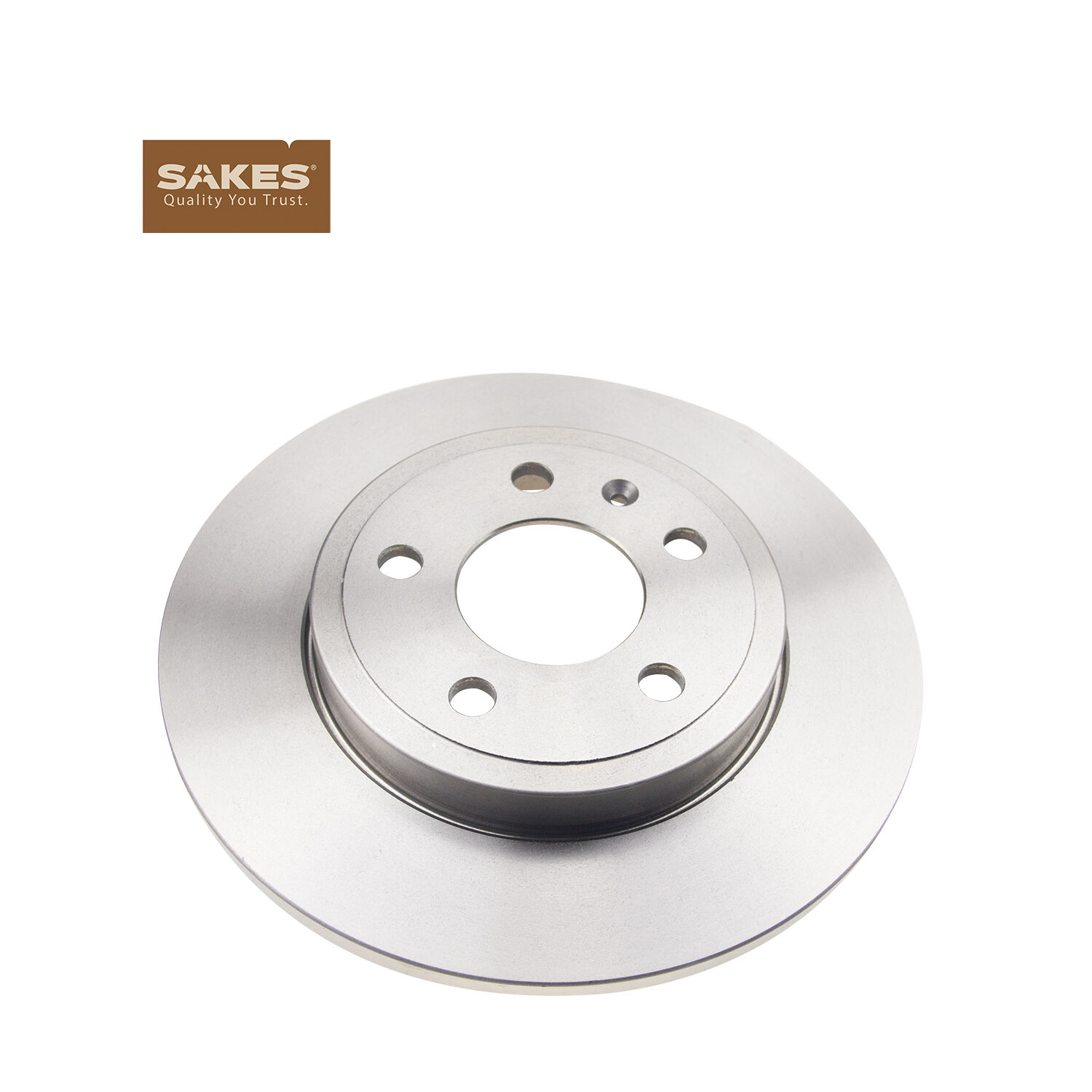
Consequences of Postponing Brake Disc Replacement
There are many reasons to stop delaying brake disc replacement. Some of the reasons are compromised safety, damage to parts, and the cost of the repair in the long run.
Postponing brake disc replacement has many disadvantages. Some of the disadvantages are that stopping distances may be increased by 25% to 40%, therefore increasing the risks of a collision. Contacting metal to metal may damage the brake discs rotors. Warping, deep scoring or cracking of the brake disc may lead to dangerous pulsation of the pedal and may result in loss of control. The neglect may lead to system-wide issues. Calcium may seize. The brake fluid may be contaminated and lose its ability to hydraulically operate, and the ABS (Anti-lock Braking System) may misread the erratic behavior of the rotors. The American Transportation Research Institute (ATRI 2023) says that ignoring the brake discs may increase the cost of the repair by four times if it leads to the replacement of the hubs, caliper, or the ABS module. The best way to ensure safety and to retain the integrity of the vehicle and to protect the passengers, is to implement brake repair.
FAQ
How do aggressive driving habits impact brake disc wear?
Why does abrupt braking increase the wear of brake parts?
A brake disc may wear 30% to 40% faster due to abrupt or sudden braking. Rapid braking produces excess heat.
What is the effect of load on the lifespan of a brake disc?
A heavy load may significantly increase the wear of a brake disc by 50% when a brake is used frequently, as in a commercial vehicle.
How often should brake pads be replaced to preserve brake discs?
To preserve brake discs and to retain brake pads, the pads should be replaced when the thickness of the brake pads is between 4 and 5 mm.
What are the warning signs that the brake disc must be replaced?
The signs include grinding sounds, brake pedal pulsating, steering wheel vibration and increased braking distance.
Can damaged brake discs be resurfaced?
When the disc thickness is above the minimum specification, resurfacing can be done for minor defects. Severely damaged discs or discs that are below the discard limit must be replaced.