
 EN
EN
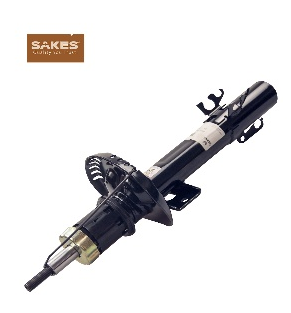
The Safety and Performance Impact of Shock Absorbers
How Shock Absorbers Contribute to Ride Comfort and Vehicle Stability
When shock absorbers work properly, they take the bouncing energy from springs and turn it into heat instead of letting everything shake around uncontrollably. According to research published by SAE International last year, good shocks help tires stay on the road about 83% better than when they start wearing out. The way these dampers regulate movement makes cars less likely to lean sideways when taking corners, and cuts down on those annoying up-and-down bounces that everyone hates. Looking at suspension system studies from 2024, drivers reported feeling significantly less tired after long trips on highways if their car had fresh shocks rather than old ones. One study showed a difference of nearly 37% in how exhausted people felt behind the wheel after driving for hours.
The Connection Between Struts and Overall Suspension System Functionality
Struts act as the main support structures for vehicle suspension systems and also contain the shock absorbers inside them. If the bearings at the top of the struts start wearing out or if the mounting points become loose, even high quality shocks can lose about 40% of how well they dampen road impacts because forces aren't being transferred properly anymore. That's why mechanics often recommend replacing both struts and shocks together when doing suspension work on cars with moderate mileage. According to industry standards set by IATF 16949 in their 2023 report, this combined approach brings back almost all original handling characteristics in around 9 out of 10 vehicles during regular maintenance intervals.
Impact of Failed Shock Absorbers on Braking Distance and Handling
When shock absorbers start failing, stopping distances on wet roads can increase by about eight meters at 60 mph, which is roughly the length of two cars according to tests done by the European Braking Safety Council. What happens next isn't pretty either. The suspension starts bouncing around uncontrollably, messing with how the wheels are aligned. This leads to tires wearing out unevenly in most cases, with around three out of every four vehicles showing signs of cupping after just 15,000 miles driven. And this isn't just about flat spots on tires. The irregular wear makes it harder to handle emergencies, creating multiple safety issues that drivers might not even realize until it's too late.
Manufacturing Defects and the Need for Rigorous Quality Control
Common defects in aftermarket shock absorbers due to poor quality control
Cheap aftermarket shocks tend to leak fluid, wear out seals faster than they should, and deliver all over the place when it comes to damping performance. According to industry data from SPC International last year, about one out of every five returns happens because manufacturers cut corners somewhere along the line - bad welding jobs, cheap materials, that sort of thing. What this means in practice is components don't last nearly as long as they should, and put extra strain on surrounding suspension bits somewhere between 30 and 40 percent higher than normal. The whole system just breaks down quicker when these shortcuts are taken during production.
Use of shock-testing machines (shock dynos) in detecting performance deviations
Shock dynos of the advanced type can mimic actual road conditions like changing temperatures and different load situations when they test how shocks perform compared to original equipment manufacturer standards. Car makers look at these results closely to spot shocks that show too much difference in damping performance beyond plus or minus 15 percent. That's basically the point where vehicle handling starts getting noticeably worse for most drivers. When shocks don't dampen properly, tires tend to wear out faster on highways, sometimes as much as 27 percent quicker than normal. This kind of wear adds up over time and costs money in replacement parts and reduced fuel efficiency for anyone doing regular highway driving.
Case study: Field failures linked to inadequate manufacturing oversight
Looking at around 12,000 suspension warranty claims from 2023 shows that roughly one third came from issues with aftermarket shocks that weren't properly hardened during manufacturing. Take one specific example where the piston rods were just too small for what they needed to handle. After months of regular driving conditions, these rods simply snapped apart, leading to total suspension failure across eighteen cars within half a year after being installed. When experts tested the metal components, they found out manufacturers had used cheaper steel alloys that didn't meet industry standards as a cost saving measure. This kind of shortcut doesn't just void warranties but puts drivers at real risk on the road.
Controversy Analysis: Cost-cutting vs. long-term reliability in aftermarket production
Some manufacturers try cutting corners on their validation processes to save money, but what they end up getting instead are lots more warranty claims and damage to their brand reputation. Research from last year showed that businesses skipping those ISO 9001 quality checks ended up with about 63 percent more product recalls related to defects than companies following international standards. Looking at the numbers makes sense though. Putting proper quality controls in place might raise production costs by around 8 to 12%, but it cuts down on problems happening in the field by somewhere between half and two thirds over five years. That kind of long term savings definitely outweighs the initial expense for most smart business owners.
Certifications as Markers of Quality: CAPA, ISO, SAE, and E-Mark
Overview of CAPA certification and its role in ensuring part equivalence
CAPA certification validates that aftermarket shock absorbers meet or exceed original equipment specifications through rigorous testing of dimensional accuracy, material properties, and load-bearing capacity. This certification ensures replacements maintain OEM-engineered performance thresholds, supporting safe and reliable part interchangeability.
ISO 9001 and IATF 16949 standards in automotive manufacturing compliance
Manufacturers adhering to IATF 16949 compliance standards demonstrate systematic defect prevention in shock absorber production, surpassing the broader quality management scope of ISO 9001. The automotive-specific framework mandates traceability for raw materials and production tolerances as tight as ±0.1mm—critical for maintaining seal integrity and piston rod alignment under dynamic loads.
SAE and E-mark certifications: Global benchmarks for safety and fitment
SAE J2664 standards govern hydraulic response rates and durability testing protocols, while E-Mark certification (E1-E24) confirms compliance with EU safety directives for valving consistency and corrosion resistance. Together, these certifications ensure predictable performance across climatic extremes, from -40°C cold starts to sustained high-temperature highway driving.
How certifications differentiate high-quality aftermarket shock absorber brands
Certifications create measurable differentiation in crowded markets: 72% of repair shops in a 2023 industry survey required at least one recognized quality mark for suspension components. Brands leveraging multi-certification strategies—like pairing CAPA with SAE validation—report 40% fewer warranty claims compared to uncertified alternatives, directly correlating to long-term brand trust.
Fit, Form, and Function: Validating Aftermarket Shock Absorber Performance
Why Dimensional Accuracy Matters in Replacement Shock Absorber Units
Getting shock absorber dimensions right down to the millimeter makes all the difference when it comes to how they fit with suspension mounting points and overall vehicle geometry. Small mistakes matter a lot here. If there's even a tiny problem with shaft diameter – usually between 14 and 22mm for regular cars – or if the bushings aren't aligned properly, this creates uneven stress across different parts. What happens? Components like control arms and stabilizer links start wearing out faster than normal. Mechanics see this all the time. According to some case studies floating around the industry, just a 0.3mm difference in measurements can boost bushing failures by nearly 30% in those heavily driven vehicles that rack up thousands of miles each year.
Performance Benchmarking Against OEM Specifications
Leading aftermarket manufacturers validate shock absorber performance through SAE J2570-compliant dyno testing, comparing critical metrics like:
- Compression/rebound force curves (±10% tolerance from OEM baselines)
- Thermal stability across operating temperatures (-40°C to 120°C)
- Cycle durability (minimum 100,000 repetitions)
Recent analyses show components meeting these benchmarks reduce post-installation vibration complaints by 52% compared to untested alternatives.
Workshop Practices for Verifying Aftermarket Shock Absorber Quality Pre-Installation
Technicians should:
- Measure compressed/extended lengths against repair manuals using digital calipers
- Inspect piston rods for machining defects under polarized light
- Test anti-corrosion coatings with solvent wipe tests
- Confirm bushing hardness (70–90 Shore A) with durometers
These protocols help identify 84% of quality issues before installation, according to 2023 workshop efficiency studies.
Building Consumer Trust Through Certified Quality Assurance
How Quality Assurance in Shock Absorber Manufacturing Builds Brand Loyalty
When shocks come with certifications such as CAPA or ISO 9001, they stop being just another off-the-shelf part and start becoming something customers actually trust. Shops that stick to these quality standards see their warranty issues drop around 40 percent according to IATF data from last year. That means mechanics keep coming back for more parts, whether they're working at professional garages or fixing their own vehicles at home. The whole industry benefits too because reliable products turn occasional shoppers into regular clients who recommend good suppliers to others based on real experience rather than marketing hype alone.
The Psychological Impact of Visible Certifications on Purchasing Decisions
When shopping around for car parts, those visible certification marks basically serve as mental shortcuts for people who get lost in all the choices available on the market. Research from NSF International shows something interesting here: about 72 percent of car owners think these certification logos mean government approval for safety standards, even though there's often no actual regulation backing them up. What's really striking is how this perception affects online buying habits. Look at brake systems and suspension components specifically, where products with certifications tend to sell three times more than those without any sort of official mark attached to them.
Survey Data: Consumer Preference for CAPA-Certified Over Non-Certified Parts
According to a 2023 survey on aftermarket parts, around two thirds of shoppers actually look for CAPA certified shocks whenever they can find them, even though these usually cost about 18 to 22 percent more than regular ones. Why? Well, repair shops have been posting their real world results online showing big differences between certified and non certified products. The stats are pretty telling too non certified struts tend to wear out almost three times faster in the first year alone. Shop mechanics we talked to mentioned something else interesting too. When they install those certified parts instead of cheaper alternatives, customers come back half as often for fixes. That means happier clients overall and better business for the service center in the long run.
Table of Contents
- The Safety and Performance Impact of Shock Absorbers
-
Manufacturing Defects and the Need for Rigorous Quality Control
- Common defects in aftermarket shock absorbers due to poor quality control
- Use of shock-testing machines (shock dynos) in detecting performance deviations
- Case study: Field failures linked to inadequate manufacturing oversight
- Controversy Analysis: Cost-cutting vs. long-term reliability in aftermarket production
- Certifications as Markers of Quality: CAPA, ISO, SAE, and E-Mark
- Fit, Form, and Function: Validating Aftermarket Shock Absorber Performance
- Building Consumer Trust Through Certified Quality Assurance