
 EN
EN
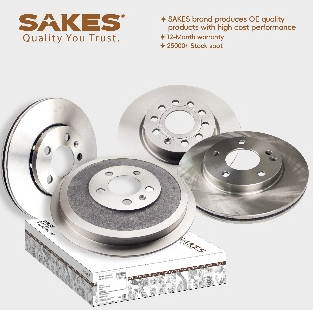
Material Selection: The Foundation of Brake Disc Durability
Cast Iron vs. Steel vs. Composite Alloys: Strengths and Trade-offs
Cast iron is still the go to material for most commercial vehicle brake discs because it's affordable and stands up well to heat stress. The numbers back this up too - around 72% of all disc failures happen when components can't handle the heat according to Ponemon research from last year. Steel alloys do have their place though, offering about 15 to 20 percent more tensile strength which makes them work better in really tough conditions like those mining trucks face daily. But here's the catch: steel doesn't dissipate heat as efficiently so engineers need to compensate with extra cooling systems built into the design. Some newer composite materials mixed with ceramics show promise too, resisting heat about 32% better than traditional options during those intense braking sessions. However these advanced materials come at a price point that keeps them mostly confined to luxury fleet vehicles where budget isn't such a concern.
Thermal Resistance and Mechanical Strength in Heavy-Duty Applications
Brake discs need to handle serious heat when going down mountains, sometimes over 650 degrees Celsius or around 1200 Fahrenheit, while still holding their shape and strength. Tests from independent labs indicate that steel mixed with ceramic materials cuts down on those tiny cracks caused by heat by about 40 percent compared to old school cast iron discs. But there's a catch worth mentioning here. The same hybrid materials aren't as tough when it gets really cold outside. They show roughly 18 percent less ability to withstand impacts below freezing temperatures. This makes them tricky to use reliably in places where winter brings harsh weather conditions.
Long-Term Wear Performance Under Continuous Load and Stress
A 2024 fleet study by the American Transportation Research Institute found composite-alloy brake discs lasted 58,000 miles versus 42,000 miles for standard cast iron in linehaul trucks. This improved longevity stems from layered material architectures that combine:
- A high-carbon base layer (4.2mm thickness) for heat absorption
- Chromium-enriched intermediate zones (1.8mm) to resist pad abrasion
- Vanadium-treated surfaces reducing oxidative wear by 29% (ASTM D7852-2022)
Material selection ultimately hinges on balancing upfront costs against total lifecycle expenses, with wear-resistant alloys cutting replacement frequency by 37% in fleet operations.
Thermal Management: Preventing Warping and Failure Under High Heat
Heat Absorption and Dissipation Mechanisms in Commercial Brake Discs
When vehicles slow down, their brake discs take in all that kinetic energy and turn it into heat, sometimes reaching over 700 degrees Celsius when stopping heavy trucks or buses. Managing this heat effectively requires good materials choices. Cast iron works well because it conducts heat so efficiently. But material alone isn't enough. Brake disc designers also incorporate things like internal vanes or surface grooves which help spread out the heat across a larger surface area, making convective cooling much more effective. Research published last year showed interesting results too. The study indicated that brake discs with properly designed cooling channels could cut peak temperatures during downhill braking by about 18 percent compared to traditional solid designs without these features.
Managing Thermal Distortion During Prolonged Braking Cycles
Repeated heating and cooling induce thermal expansion mismatches, leading to warping. Manufacturers counteract this through:
- Precision alloying: Adding chromium or molybdenum improves dimensional stability at elevated temperatures
- Controlled cooling processes: Gradual post-production cooling minimizes residual stresses
- Operational safeguards: Engine brakes or retarders reduce friction braking reliance in mountainous regions
These strategies collectively reduce warping incidents by 35% in fleet vehicles logging over 100,000 miles annually.
Ventilated vs. Solid Disc Designs: Cooling Efficiency Compared
| Design | Heat Dissipation Rate | Weight | Ideal Use Case |
|---|---|---|---|
| Ventilated | 22°C/sec | Higher | Long-haul trucks, buses |
| Solid | 14°C/sec | Lower | Light-duty trailers |
Ventilated discs utilize radial vanes to create airflow channels, achieving 57% faster cooling than solid designs under SAE J2681 test conditions. Despite their superior performance, solid discs remain common in cost-sensitive applications where sustained thermal loads are minimal.
Friction Performance Across Real-World Operating Conditions
Consistent Braking in Wet, Dry, and Extreme Temperature Environments
Brake discs used commercially need to keep working properly no matter what kind of weather they face, whether it's pouring rain on city streets or scorching desert temperatures or freezing winter roads. A study from Tribology Transactions indicates that when brakes have floating pad designs, their performance doesn't vary so much in wet conditions, actually cutting down variation by around 18 percent because water gets dispersed better. For dry surfaces, high carbon cast iron discs tend to be pretty consistent with friction levels between 0.38 and 0.42, plus they don't crack easily even when temps hit over 650 degrees Celsius. When things get really cold though, those discs with special surface textures help stop ice from sticking to them, so they retain about 85% of normal friction power at minus 25 degrees Celsius. Regular smooth discs just don't hold up as well in these icy conditions.
Balancing Friction Coefficient Stability and Pad Compatibility
Getting good braking performance means matching disc and pad materials just right. When ceramic composite pads work with hardened steel discs, they keep about 92% of their original friction power even after driving 20 thousand miles around town. Some pad types that are too aggressive can wear down discs at twice the normal rate, especially for those big delivery trucks that stop constantly. On the flip side, softer organic pads don't hold up well at highway speeds where stability matters most. Most top car makers have settled on middle ground friction materials these days, something around mu 0.4 give or take 0.03. They test this through computer models from ANSYS software before putting them into production vehicles. These materials last reliably for over 100k miles without major issues, which is why we see them appearing more frequently in modern brake systems.
Manufacturing Precision: How Production Impacts Brake Disc Longevity
Casting Quality and Structural Integrity Standards
Durability begins with defect-free casting. Proper molten metal treatment and controlled cooling prevent subsurface flaws responsible for 74% of early disc failures (International Journal of Automotive Engineering, 2023). Foundries adhering to ISO 185 grading standards reduce porosity risks by 63%, ensuring uniform grain structure capable of enduring 50,000+ braking cycles.
Machining Accuracy and Surface Finish for Optimal Performance
When it comes to precision machining, one major benefit is reducing those stress points that cause components to wear out faster over time. The latest CNC machines can actually produce surfaces with roughness levels below 5 microns, which according to some studies from the Society of Manufacturing Engineers back in 2024, makes pads work better with discs by about 30 percent. Getting edge chamfers right within plus or minus 0.25 millimeters really matters too because it stops cracks from forming when things get hot. And maintaining runout under 0.08 mm means parts keep running smoothly even when temperatures hit around 1,200 degrees Celsius during operation.
Quality Control in High-Volume Brake Disc Production
Automated inspection systems now scan 100% of production batches for critical defects. Vision-guided robots detect microcracks as small as 0.4mm, cutting warranty claims by 52% (Frost & Sullivan, 2022). Statistical process control keeps hardness variance below 15 HB across disc surfaces, enabling predictable wear patterns over 300,000+ km service life.
Application-Specific Design: Matching Brake Discs to Commercial Vehicle Demands
Brake Disc Requirements for Trucks, Buses, and Trailers
Commercial vehicles come in all shapes and sizes, so their braking systems need to be customized for each application. Take those massive heavy duty trucks that haul loads exceeding 40 tons - they need brake discs with cross sections about 30% thicker compared to regular cars because stopping all that weight takes serious energy absorption capacity. Then there are city buses making hundreds of stops every single day. These machines generate incredible amounts of heat through constant braking, which is why proper heat dissipation becomes absolutely critical to prevent brake failure during peak hours. Semi trailers face another challenge altogether. Road salt eats away at metal components over time, which is why many operators opt for corrosion resistant coatings on their brake discs. According to recent research by Ponemon Institute, nearly a quarter of all disc replacements actually result from rust damage caused by exposure to road salts.
Impact of Duty Cycle and Operating Environment on Durability
The brake discs on mining dump trucks working in mountains get incredibly hot sometimes reaching over 650 degrees Celsius, which is about double what regular highway trucks experience. Urban refrigerated delivery vans deal with their own challenges too, facing repeated temperature fluctuations because they start up cold so often and stop frequently in city traffic. All these extreme conditions mean manufacturers have to design special alloys and cooling systems that match exactly what each type of vehicle goes through daily. Research published last year showed that brake discs made for wet coastal areas tend to last around 17 percent longer since they resist rust better, though results can vary depending on local conditions.
Engineering for Longevity in Fleet and Long-Haul Transport Applications
Leading manufacturers employ predictive modeling to design brake discs for 500,000-mile service life in over-the-road trucks. Key innovations include:
- Laser-clad friction surfaces reducing pad groove formation by 40%
- Asymmetric ventilation vanes improving airflow efficiency by 28% during continuous braking
- Ultrasonic testing detecting micro-cracks 0.3mm smaller than standard thresholds
Recent research highlights growing demand for thermally stable solutions in electric-hybrid drivetrains, accelerating adoption of advanced composites. Fleet operators report 23% fewer brake-related downtime incidents when using application-specific discs compared to universal designs.
FAQ
What materials are commonly used in commercial vehicle brake discs?
Common materials include cast iron, steel alloys, and advanced composite materials mixed with ceramics. Each material has its own benefits and trade-offs.
What makes composite alloys better than traditional materials for brake discs?
Composite alloys often offer better heat resistance and longer lifespan under stress. They are especially useful in applications where budget is not a primary concern.
How do ventilated brake discs compare to solid ones?
Ventilated discs have airflow channels that enable faster cooling, making them ideal for heavy-duty applications like long-haul trucks and buses.
Why is precision important in brake disc manufacturing?
Precision in machining and casting quality significantly impacts the durability and performance of brake discs, reducing risks of failure and enhancing longevity.
Table of Contents
- Material Selection: The Foundation of Brake Disc Durability
- Thermal Management: Preventing Warping and Failure Under High Heat
- Friction Performance Across Real-World Operating Conditions
- Manufacturing Precision: How Production Impacts Brake Disc Longevity
- Application-Specific Design: Matching Brake Discs to Commercial Vehicle Demands
- FAQ