
 EN
EN
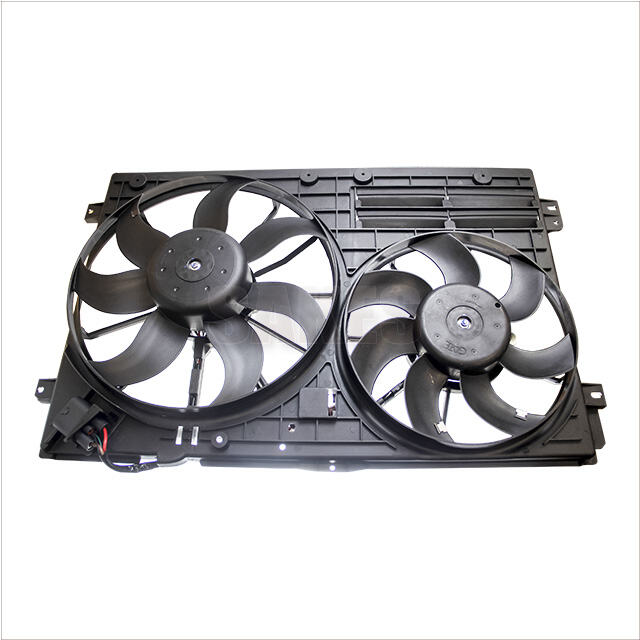
Assess Your Engine's Thermal Load to Determine Required Radiator Fan CFM
Calculate Minimum CFM Based on Engine Displacement and Heat Output
To figure out what size radiator fan we need at minimum, start looking at our engine's displacement along with how much heat it actually produces. Most folks find around 1250 cubic feet per minute works okay for regular four cylinder engines, while something closer to 2500 CFM is usually needed for standard V8 powerplants. Keep in mind though these numbers serve more as guidelines than hard rules. When dealing with modified setups, engines running higher compression ratios, or those equipped with turbochargers/superchargers, it's wise to throw in an extra 15 to 20 percent just because they tend to run hotter overall. And remember there's always a good formula out there somewhere that can help confirm our calculations once we have all the basics sorted out.
CFM = (Engine Displacement in Liters × RPM × Volumetric Efficiency) · 5660
The volumetric efficiency of engines typically falls somewhere around 75% for standard naturally aspirated models, but can jump above 90% when we're talking about properly tuned turbo or supercharged setups. And here's something interesting - these boosted systems actually need about 30% more airflow because of those hotter exhaust gases and the extra heat generated by intercoolers. From what real world tests have shown time and again, if a vehicle has fans that are too small for the job, coolant temps will climb anywhere between 18 and 25 degrees Fahrenheit when running under heavy loads for extended periods. This problem becomes even worse at lower speeds or when pulling trailers behind the vehicle.
Understand the Difference Between Free-Air CFM and Static Pressure CFM
The free air CFM ratings we see on spec sheets are pretty much useless when it comes to cars. These numbers look great on paper but actually overestimate what fans can do in real world conditions by somewhere between 40 to maybe even 60 percent. Why? Because they don't account for all that backpressure from things like radiators, condenser units, and those complicated grille assemblies modern vehicles have. What matters more for actual cooling performance is static pressure CFM measurements taken at around 0.1 to 0.25 inches of water column resistance, which gives a better idea of how well a fan works behind a radiator core. And let's face it, most modern radiators use dense aluminum construction and often have multiple layers of AC condensers stacked together. All this adds up to serious airflow resistance that makes standard fans perform far worse than their specs suggest.
| CFM Type | Measurement Context | Real-World Efficiency Drop |
|---|---|---|
| Free-Air CFM | Open environment | 40–60% lower in vehicles |
| Static Pressure CFM | Behind radiator/grille | <15% variance under load |
Prioritize fans rated for static pressure performance—not just peak CFM—and always verify third-party airflow tunnel test data. Shrouded designs maintain 85–92% of their rated static pressure CFM through radiators, versus just 55% for unshrouded units.
Compare Radiator Fan Configuration Options for Maximum Cooling Efficiency
Push vs Pull: Which Radiator Fan Placement Delivers Better Heat Dissipation?
When installed in front of radiators, push fans blast air right through the core, making them great for situations where vehicles are moving slowly or sitting still, like during traffic jams or idling. The natural airflow just isn't enough in these scenarios. On the other hand, pull fans sit behind the radiator and suck air across it instead. This setup works better at higher speeds because it takes advantage of how air moves around cars on highways. Studies from SAE show these pull fans cut down on resistance by somewhere between 15 and 22 percent compared to traditional push systems. Most car manufacturers today go with pull fans since they offer good all-around performance. However, there are still plenty of cases where push fans make sense, especially in compact engine compartments where there's simply no room to mount something at the back. Each approach comes with its own set of pros and cons worth considering depending on specific needs.
- Push fans generate higher static pressure—ideal for thick, high-density cores
- Pull fans operate 3–5 dB quieter and reduce turbulence-induced noise
- Dual-fan hybrid systems (push + pull) deliver maximum heat dissipation for extreme-duty or track applications
Shrouded vs Unshrouded Radiator Fans: Measuring Real-World Airflow Gains
Shrouds those rigid covers that seal the space between fan blades and radiator cores are pretty much essential when talking about performance cooling systems. When these shrouds are properly installed, they stop air from bypassing the system and getting recycled, which means the messy radial airflow gets turned into something much better focused and fast moving axial flow instead. Testing done on dynos shows that fans with shrouds can deliver anywhere from 25 to 40 percent more effective CFM while using exactly the same amount of power as their unshrouded counterparts. This makes a real difference too, dropping coolant temps by around 8 to 12 degrees Fahrenheit in crowded engine compartments where heat management is critical. Some folks still go for unshrouded fans for their minimalist look or because they fit better in certain spaces, but lets be honest these setups lose about 30% of their maximum airflow potential and create hot spots on parts of the radiator that aren't getting enough cooling. Anyone working on a modified engine even just minor tweaks should seriously consider integrating shrouds to get even cooling across the entire core and maintain stable temperatures under load.
Evaluate Radiator Fan Blade Design and Motor Technology for Efficiency and Reliability
Straight, Curved, or Angled Blades: Impact on Airflow, Noise, and Efficiency
The shape of blades plays a big role in how well they perform in three main areas: how much air moves through them, what kind of noise they make, and how efficiently they convert energy. Straight blades are simple to manufacture and cheaper, but they tend to create messy airflow patterns and aren't very efficient either, plus they usually run louder during operation. When blades are curved like airplane wings, they cut down on resistance as air flows past them. This design boost can increase airflow between 15 and 20 percent, makes the air move more smoothly, and cuts down on the racket too. Blades that are angled just right with specific twists along their length work best for pushing air in particular directions and building up pressure without needing extra power. Some tests show these specially designed angled blades actually save around 20% in energy compared to regular ones. What the blades are made from also counts for something. Reinforced plastic or carbon fiber composites hold their shape even when temperatures change, spin up quicker because they're lighter, and don't bend out of shape after running at high speeds for long periods.
Brushless DC Radiator Fans: Energy Savings, Longevity, and Low-Noise Performance
When it comes to reliable motor tech with smart temperature control, brushless DC or BLDC motors are setting the standard these days. These motors swap out those old mechanical brushes for electronic commutation instead. What does that mean practically? Well, there's no friction wear anymore since there are no brushes rubbing against anything. Electrical resistance drops significantly too. Plus, they can adjust speeds really precisely using something called PWM, which stands for Pulse Width Modulation if anyone cares. The end results speak for themselves actually. Energy efficiency jumps anywhere from 30 to 50 percent compared to traditional models. They run almost silently too, about 15 decibels quieter than their brushed counterparts. And let's not forget about longevity. Most BLDC motors last well over 20,000 hours before needing replacement, which is roughly three times longer than what we typically see with brushed motors. Another nice feature worth mentioning is the built-in thermal feedback system. This lets the fan adjust its RPM dynamically based on actual needs. So when things aren't too hot, the fan doesn't work as hard, saving power. But when temperatures rise, it kicks into full gear to provide maximum cooling exactly when required. Given all these benefits, it's no wonder why BLDC technology has become so important in today's world where efficiency matters, emissions need reduction, and performance expectations keep getting higher across various thermal management applications.
Ensure Proper Radiator Fan Sizing and Vehicle-Specific Integration
Getting the right size radiator fan means finding that sweet spot between proper airflow, available space, and how everything works together in the engine bay. Start by checking those core measurements on the radiator itself, not just the whole housing, since this tells us what actual mounting area we have to work with. Make sure there's enough room between the fan setup and other parts nearby like water pump pulleys, AC compressors, or even the intake manifold. Fans that are too small will lead to constant overheating when pushing hard, while ones that are way too big just drain power, create annoying vibrations, and might block important components altogether. When figuring out how much airflow (CFM) our setup needs, remember to account for things like engine size, any performance upgrades we've added, and how often the vehicle is actually used. Installing these fans properly involves looking at all sorts of factors including how tight the space is under the hood, where all the accessories sit, how thick the radiator core is, and what kind of mounting points came from the factory. Don't forget to double check if the fan fits correctly with our particular car model beyond just matching bolts or diameter specs, because getting this wrong can mess up airflow patterns and cause problems with the shroud seal holding air in where it should be.
FAQ
What is the significance of CFM in radiator fans?
CFM, or cubic feet per minute, is a measure of the airflow rate. It indicates how much air a fan can move per minute, which is crucial for cooling efficiency in radiator fans.
How do I calculate the required CFM for my radiator fan?
You can calculate the required CFM using the formula: CFM = (Engine Displacement in Liters × RPM × Volumetric Efficiency) · 5660. This accounts for engine size, RPM, and volumetric efficiency.
What is the difference between free-air CFM and static pressure CFM?
Free-air CFM is measured in open environments and typically overestimates performance in real-world vehicle conditions. Static pressure CFM accounts for resistance from radiators and grilles, providing a more accurate measure of performance.
Why choose shrouded fans over unshrouded fans?
Shrouded fans direct airflow efficiently through the radiator, improving cooling performance by 25 to 40 percent compared to unshrouded fans, which lose about 30% of their airflow potential.
Table of Contents
- Assess Your Engine's Thermal Load to Determine Required Radiator Fan CFM
- Compare Radiator Fan Configuration Options for Maximum Cooling Efficiency
- Evaluate Radiator Fan Blade Design and Motor Technology for Efficiency and Reliability
- Ensure Proper Radiator Fan Sizing and Vehicle-Specific Integration
- FAQ