
 EN
EN
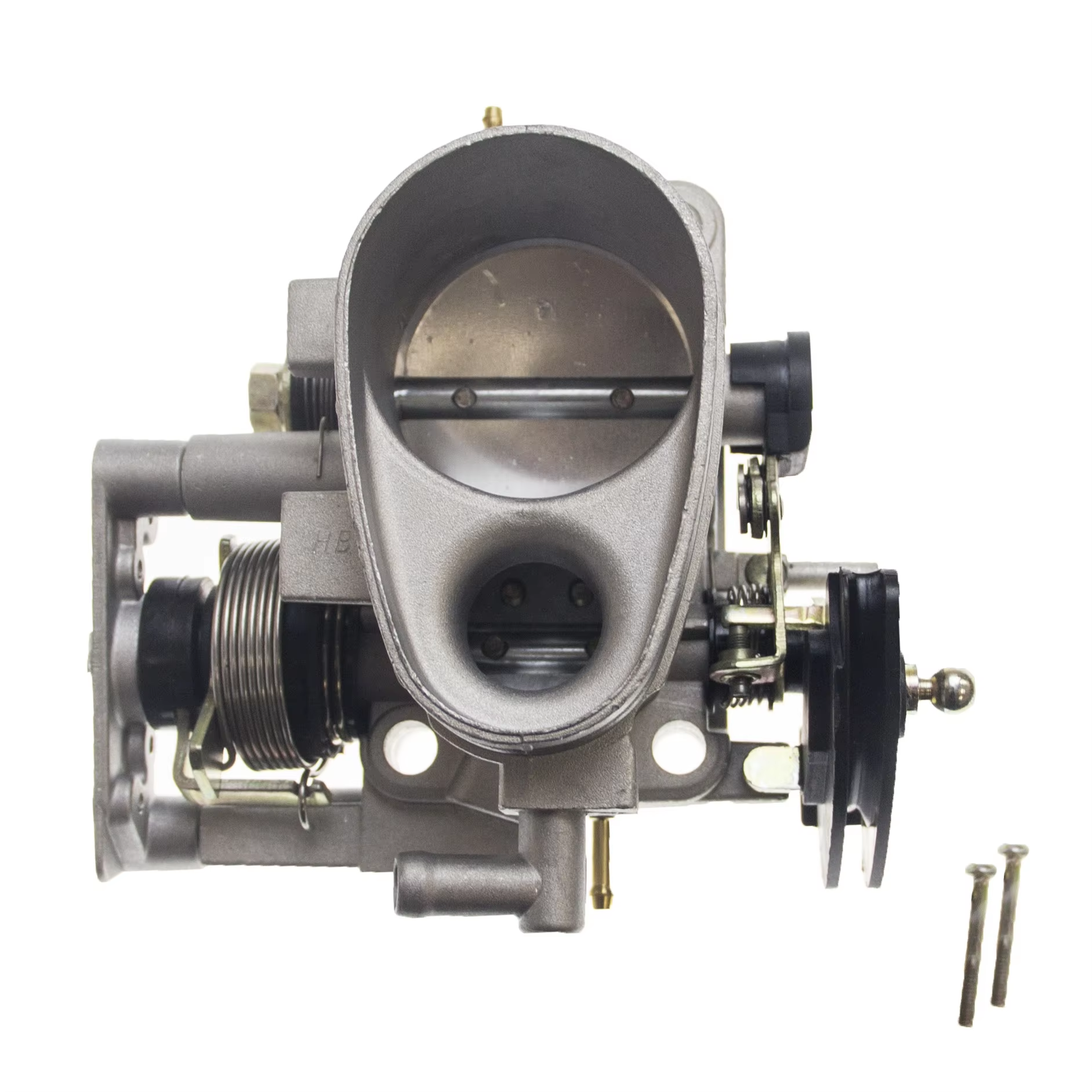
How to Inspect Throttle Body Malfunctions?
A throttle body malfunction rarely produces a single unambiguous fault code. Instead, the ECU logs correlation errors between commanded and actual throttle position, torque reduction requests, and sometimes seemingly unrelated codes for mass airflow or oxygen sensor faults that are actually downstream consequences of incorrect air metering. A systematic inspection that isolates the throttle body from the ECU, wiring, and sensor systems avoids replacing a functional component.
Step One: Read the Codes, But Do Not Trust Them Blindly
The most common throttle body malfunction codes are P0121 (throttle position sensor A circuit range/performance), P0122 (low input), P0123 (high input), P0221 (sensor B range/performance), and P0638 (throttle actuator control range/performance). These codes confirm a correlation problem between the commanded and reported throttle positions—they do not confirm the throttle body is the cause.
Before condemning the throttle body, check the freeze frame data stored with the code. If the code set at idle with engine temperature at 85°C and the reported throttle position at 18% when idle should be 3–5%, the throttle plate is sticking partially open—a mechanical issue confirmed by the data. If the code set at highway speed with reported throttle position jumping from 35% to 0% and back to 40% within 0.5 seconds, the issue is more likely electrical—a failing position sensor or intermittent wiring connection.
Step Two: Live Data Analysis
Connect a scan tool capable of graphing live data and observe the throttle position sensor voltage with the ignition on (engine off). Slowly depress the accelerator pedal from 0% to 100% and back. Sensor A voltage should rise smoothly from approximately 0.5V at closed throttle to approximately 4.5V at wide open. Sensor B typically operates on an inverse curve—starting high and decreasing—as a redundant check. Any sudden voltage dropouts, flat spots where voltage stops changing for more than 0.5 seconds, or disagreement between sensors A and B exceeding 0.1V indicates a faulty throttle body.
The throttle actuator current draw tells another story. At idle with the engine running, the throttle motor maintains the plate at the commanded position through continuous small adjustments against the return spring. Normal idle current draw is 0.3–0.8 amps. A throttle body with carbon buildup requires higher current—1.0–1.8 amps—because the motor is working against physical resistance. Current draw above 2.0 amps at idle indicates the motor is near its stall limit and the throttle body requires cleaning or replacement.
Step Three: Visual and Mechanical Inspection
Remove the intake duct and inspect the throttle plate and bore with a flashlight. Carbon deposits accumulate most heavily on the back of the throttle plate and the bore wall directly behind it, where crankcase ventilation gases enter the intake stream. Light tan deposits covering less than 20% of the bore circumference are normal for engines with 60,000–100,000 km. Black, wet deposits exceeding 50% coverage, particularly deposits that physically touch the throttle plate edge and prevent it from closing to its designed idle gap, are causing the malfunction regardless of what the scan tool reports.
With the ignition off, manually push the throttle plate open with a clean finger. The plate should move smoothly with consistent spring resistance throughout its travel range, snapping firmly closed when released. Any gritty feel, sticking at any point in the travel, or a plate that stays partially open when released confirms a mechanical malfunction. Never force a throttle plate open on an engine where the ignition is on—the electronic motor actively holds position and forcing it against the motor drive can strip the plastic reduction gears.
Step Four: Wiring and Connector Inspection
The throttle body connector carries 5V reference voltage, sensor ground, two signal return wires (sensors A and B), and two motor drive wires. Back-probe the connector with the ignition on: the reference voltage between the 5V supply pin and ground should be 4.9–5.1V steady. A reference voltage below 4.8V or fluctuating more than ±0.1V indicates a problem upstream in the ECU 5V reference circuit or a short to ground elsewhere on the reference circuit shared with the accelerator pedal sensor and other engine sensors.
Continuity testing of each wire from the throttle body connector to the ECU connector, with the connectors disconnected at both ends, identifies wiring harness breaks. A resistance above 1 ohm on any single wire indicates a developing failure—typically at the bend point where the harness flexes during engine movement.
Case: Erratic Idle Diagnosis Saves Unnecessary Replacement
An Audi with a P0121 code and an idle that oscillated between 700 and 1,100 RPM was diagnosed by a workshop as needing a throttle body replacement. Before authorizing the repair, the owner's independent diagnostic check revealed that the throttle position sensor sweep was smooth in live data, but the reference voltage at the throttle body connector was oscillating between 4.7V and 5.1V. The fault was traced to a partially broken wire in the engine harness approximately 15cm from the throttle body connector. A wire repair costing the equivalent of 30 resolved the issue that was quoted for a 350 throttle body replacement. The throttle body itself, supplied by an aftermarket manufacturer like Sakes Auto Parts, would have been perfectly functional but unnecessary.
Frequently Asked Questions
Can a dirty throttle body cause a malfunction code?
Yes. Carbon buildup that prevents the throttle plate from reaching its fully closed idle position causes the ECU to detect a correlation error between commanded idle position and actual position. Cleaning the throttle body often resolves the code without component replacement.
How can a technician distinguish between a sensor fault and a throttle body motor fault?
A sensor fault produces position signal errors without changes in motor current draw. A motor fault produces increased current draw and may be accompanied by mechanical noise from the gear drive. Live data graphing of both position and current, simultaneously, reveals which system is failing.
Will disconnecting the battery reset throttle body adaptation?
Disconnecting the battery clears the ECU's learned throttle body closed-position value. On many vehicles, the ECU relearns this during the next drive cycle. On others—particularly VW/Audi—a scan tool adaptation must be performed after battery reconnection to restore proper idle control.
How frequently should throttle body inspection be performed?
Inspection should accompany every major service interval (30,000–50,000 km) on direct-injection engines, which are more prone to carbon buildup. Port-injected engines can extend inspection intervals to 60,000–80,000 km.
Can a throttle body malfunction cause transmission shifting problems?
Yes. The transmission control module uses throttle position data to determine shift points and line pressure. An erratic throttle position signal causes harsh or delayed shifts that appear to be a transmission problem but are actually a throttle body sensor fault.
Where can technicians source reliable replacement throttle bodies?
OE-quality aftermarket suppliers like Sakes Auto Parts provide throttle bodies manufactured to factory specifications for VW, Audi, and other European applications. Their units include the correct connector configuration, sensor calibration, and gasket for direct fitment.