
 EN
EN
Why Do Shock Absorbers Make Abnormal Noises?
A suspension noise that appears only over speed bumps, disappears on smooth roads, and gets progressively louder over weeks is almost certainly shock absorber related. The challenge is distinguishing which noise points to which failure—because the repair path for a worn top mount is very different from replacing a leaking shock absorber body. Learning the sound signatures saves both money and misdiagnosed replacements.
The Sound Signature Diagnostic
A sharp metallic clunk occurring once per bump, heard from one corner of the vehicle, is the classic signature of a failed shock absorber top mount. The mount contains a rubber bushing bonded between two steel sleeves; when the rubber delaminates from the metal, the two steel surfaces contact directly under suspension compression, producing the metallic impact sound. The noise is distinctly different from a worn ball joint clunk, which occurs during steering input rather than suspension travel.
A persistent squeak or creak during slow-speed suspension movement—particularly noticeable when driving over speed bumps at parking lot speeds—points to a dry or worn shock absorber piston rod seal. The seal, which keeps hydraulic oil inside and contaminants out, uses a thin film of oil for lubrication. When the seal wears or the oil film breaks down from age, the rod rubs against the seal lip dry, producing the characteristic creaking sound. A visual inspection often reveals oil mist on the shock body below the seal—the telltale sign that the noise is seal-related rather than mount-related.
A rattling noise that sounds like loose hardware, heard continuously on rough roads rather than on single impacts, suggests internal shock absorber damage. The piston valve stack inside the shock body controls damping force by metering oil flow through precision orifices. When a valve shim cracks or the piston retaining nut loosens, the resulting metal-on-metal contact inside the sealed body produces a rattle that external inspection cannot see.
Visual Inspection Confirmation
A shock absorber that is wet with oil below the piston rod seal—not just a light film but visible droplets or a wet patch extending more than 25mm down the body—has failed hydraulically. The internal oil volume is finite; once enough has leaked, the shock's damping force drops significantly, and the noise is accompanied by degraded handling: increased body roll, longer braking distances, and a floating sensation at highway speed.
The top mount can be inspected without removing the shock. With the vehicle on the ground, open the hood (front) or access the trunk trim (rear) and locate the top mount retaining nut. Have an assistant rock the vehicle body up and down while you observe the mount from above. Any vertical movement between the mount center and the vehicle body indicates rubber delamination. The mount should move as a single unit with the shock rod; separation confirms mount failure.
A bent or scored piston rod is visible on raising the vehicle with the suspension at full droop. Even a scratch deep enough to catch a fingernail will damage the seal during subsequent compression cycles, causing progressive oil loss. Piston rod damage typically occurs from road debris impact—a stone thrown at highway speed striking the exposed rod section.
The Repair Scope Decision
Replacing only the top mount while retaining a shock with 80,000 kilometers of service is a short-term fix. The labor to access the mount is identical to the labor to replace the complete strut assembly. The price difference between a mount-only kit and a complete shock absorber assembly with mount pre-installed is typically modest—and the assembly replacement eliminates the risk of the old shock leaking six months later, requiring a second labor charge.
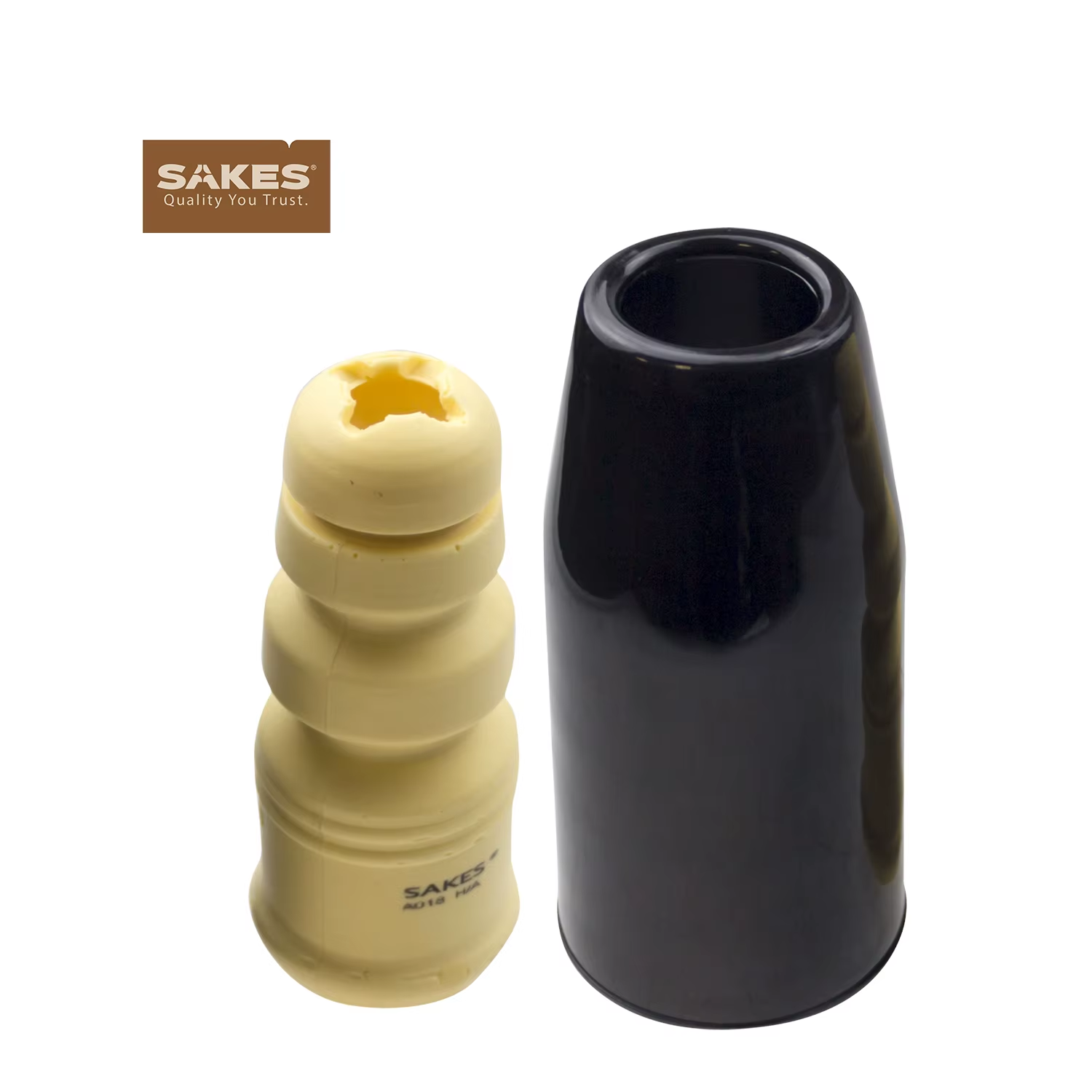
Pre-assembled strut assemblies that include the shock absorber, coil spring, top mount, and dust boot as a single unit eliminate the need for spring compression during installation. For buyers sourcing replacement parts, complete strut assemblies from aftermarket suppliers like Sakes Auto Parts provide OE-quality fitment with a single part number for simplified ordering.
Case: Rear Suspension Noise Misdiagnosed
A workshop diagnosed a rear suspension rattle on a vehicle at 90,000 km as a failed shock absorber and quoted replacement of both rear units. Before authorizing the work, a second inspection revealed the noise originated from a loose top mount retaining nut that had backed off by approximately 3mm. Tightening the nut to specification—50 Nm on this application—eliminated the noise completely. The shock absorbers were still within service specification. The lesson: always inspect the mount and fasteners before concluding the shock body has failed.
Frequently Asked Questions
How can I tell if the noise is from the shock absorber or the sway bar link?
Sway bar link noise occurs with any suspension movement that differentiates left from right—even small one-wheel bumps. Shock absorber noise occurs primarily with vertical movement. Disconnecting one sway bar link temporarily and test-driving isolates the noise source.
Is it safe to drive with a noisy shock absorber?
A noisy top mount or seal creak, if the shock still provides damping, is not immediately dangerous but will degrade. A leaking shock that has lost significant oil volume compromises emergency braking distance and should be replaced promptly. Any suspension noise that changes suddenly in character warrants immediate inspection.
Do shock absorbers need to be replaced in pairs?
Yes. Replacing only one side creates a damping imbalance that causes uneven tire wear and unpredictable handling during emergency maneuvers. Both shocks on the same axle should be replaced simultaneously, regardless of which one is noisy.
How long do shock absorbers typically last before making noise?
Shock absorbers typically last 80,000–100,000 km under normal driving conditions before seals begin to degrade and noise appears. Vehicles operated on rough roads or carrying heavy loads regularly may require replacement at 60,000–80,000 km.
Can shock absorber noise be temporarily silenced with lubricant?
Spraying lubricant on the top mount bearing may temporarily reduce noise but does not address the underlying delamination. Lubricating the piston rod seal can attract dirt that accelerates seal wear. These are diagnostic techniques—not repairs.
Where can quality replacement shock absorbers be sourced?
Aftermarket suppliers specializing in European vehicle applications, such as Sakes Auto Parts, offer complete shock absorber assemblies and individual repair kits with OE-equivalent specifications. Their product range covers common VW and Audi chassis applications with factory-matched damping rates.