
 EN
EN
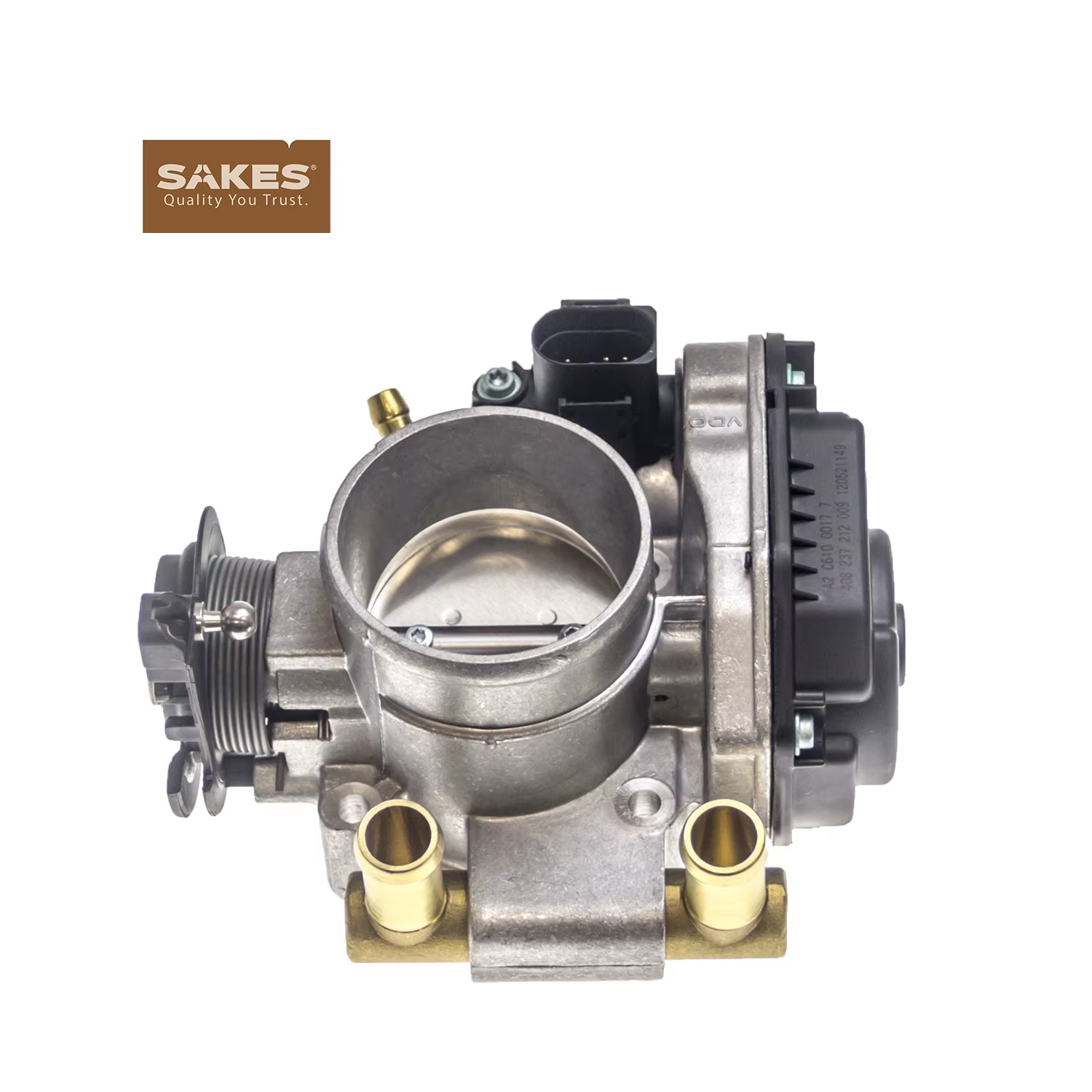
How to Replace a Car Throttle Body?
A failing throttle body rarely announces itself with a single clear failure—instead, the symptoms accumulate: an unsteady idle that dips below 600 RPM, hesitation when accelerating from a stop, and eventually a check engine light with a P0121 or P0221 code pointing to throttle position sensor correlation errors. Replacing the throttle body is a mechanical task accessible to anyone comfortable with basic hand tools, but the electronic recalibration step that follows is where many DIY replacements go wrong.
Before Starting: Diagnosis Confirmation
Replacing a throttle body without confirming it is the root cause is an expensive misdiagnosis. A P0121 or P0221 code can also originate from a failing accelerator pedal position sensor, a wiring harness break at the throttle body connector, or a dirty throttle plate causing inconsistent position feedback. The definitive test uses a bidirectional scan tool: command the throttle plate to sweep from 0% to 100% and observe whether the position sensor reports a smooth, linear response. A healthy throttle body sweeps full range without hesitation or dead spots. If the commanded sweep is smooth but the position feedback jumps or flatlines, the throttle body is confirmed faulty.
A simpler preliminary check: with the ignition on (engine off), have an assistant press the accelerator pedal slowly while you listen at the throttle body. The electronic motor should produce a smooth whine as the plate opens and closes, with no grinding, clicking, or hesitation. Any mechanical noise from the motor drive gears is grounds for replacement regardless of scan tool results.
The Replacement Procedure
Step one is electrical isolation. Disconnect the negative battery terminal and wait at least 10 minutes. This allows the ECU capacitors to discharge and prevents the electronic throttle control motor from receiving unintended voltage spikes during disconnection.
Step two: remove the intake ducting between the air filter housing and the throttle body. On most vehicles, this is a rubber or silicone hose secured by a worm-drive clamp at each end. Loosen both clamps, twist the duct to break the seal, and slide it off. Inspect the duct interior for oil residue—excessive oil suggests a failing PCV system that should be addressed, as oil ingestion accelerates carbon buildup on the new throttle body.
Step three: disconnect the electrical connector by depressing the locking tab and pulling straight back—never twist or pry at an angle, as the connector pins are easily bent. Then remove the vacuum lines attached to the throttle body or adjacent intake manifold ports, labeling each with masking tape to ensure correct reconnection.
Step four: remove the four mounting bolts. They are typically M6 or M8 bolts with 10mm or 13mm heads, torqued to 8–12 Nm. Loosen them in a cross pattern. The old throttle body will likely be stuck to the intake manifold by the gasket—tap it gently with a soft mallet on the side of the housing, not on the plastic electronic cover, to break the seal.
Step five: clean the intake manifold mounting surface with a lint-free cloth and throttle body cleaner. Any old gasket material left behind will create a vacuum leak that causes a high idle and lean fuel trim codes. Install the new gasket (always replace; never reuse), position the new throttle body, and torque the bolts in a cross pattern to specification. Overtightening warps the throttle body housing and causes the throttle plate to bind.
The Calibration Step That Must Not Be Skipped
Installing the new throttle body completes the mechanical work but not the job. The ECU must learn the new unit's closed-position voltage. Without this calibration, the engine may exhibit a hanging idle, a hunting idle between 800 and 1,500 RPM, or a no-start condition because the ECU cannot determine the baseline throttle position.
The calibration method varies by vehicle. Many Asian and European vehicles self-calibrate by cycling the ignition: key on (engine off) for 15 seconds, key off for 30 seconds, repeat twice, then start the engine and let it idle for 10 minutes without touching the accelerator. Some VW/Audi models require a throttle body adaptation using a scan tool—VCDS or equivalent—by selecting "Throttle Body Alignment" under Engine Electronics, Basic Settings, channel 060. Aftermarket throttle bodies from suppliers like Sakes Auto Parts are manufactured to OE tolerances and adapt to ECU parameters without additional resistance matching.
Case: DIY Throttle Body Replacement Avoids a Tow
A VW owner experienced a sudden loss of throttle response on a highway off-ramp—the engine dropped to idle and would not respond to the accelerator. A scan revealed a P0638 code (throttle actuator control range/performance). Rather than towing the vehicle, the owner purchased a replacement throttle body from an aftermarket OE-quality supplier, performed the mechanical swap in approximately 45 minutes, completed the VCDS throttle body adaptation in under 2 minutes, and returned to normal operation. The total cost was roughly 30% of the dealer quote.
Frequently Asked Questions
How long does it take to replace a throttle body?
Approximately 45–90 minutes for a first-time DIY replacement on a common four-cylinder engine. Access is straightforward on most transverse-mounted engines; vehicles with the throttle body facing the firewall add 30–45 minutes for intake manifold removal.
Does a new throttle body need to be programmed?
Yes. Every electronic throttle body requires a closed-position calibration with the ECU. Many vehicles self-calibrate through an ignition cycling procedure; others require a scan tool adaptation. Skipping calibration causes idle control issues.
Can a faulty throttle body damage the engine?
A throttle body that fails in the closed position prevents the engine from starting but causes no damage. A throttle body that fails partially open is also non-damaging. However, driving with a sticking throttle body that intermittently holds the plate open creates a safety risk and should be addressed immediately.
How much does a replacement throttle body cost?
Aftermarket OE-quality throttle bodies from suppliers like Sakes Auto Parts typically cost 50–70% less than OEM dealer units while meeting the same dimensional and electrical specifications for VW, Audi, and other European applications.
What tools are needed for throttle body replacement?
Basic hand tools: a socket set (8mm–13mm), screwdrivers, pliers for hose clamps, throttle body cleaner, lint-free cloths, a torque wrench, and potentially a scan tool for adaptation. A magnetic pickup tool is useful for retrieving dropped bolts.
How can a buyer verify the quality of an aftermarket throttle body?
Check that the supplier provides OE reference numbers for cross-referencing, uses the same connector type and pin configuration as the original, and includes a new gasket. Quality aftermarket manufacturers like Sakes Auto Parts manufacture to OE tolerance specifications and provide fitment guarantees.