
 EN
EN
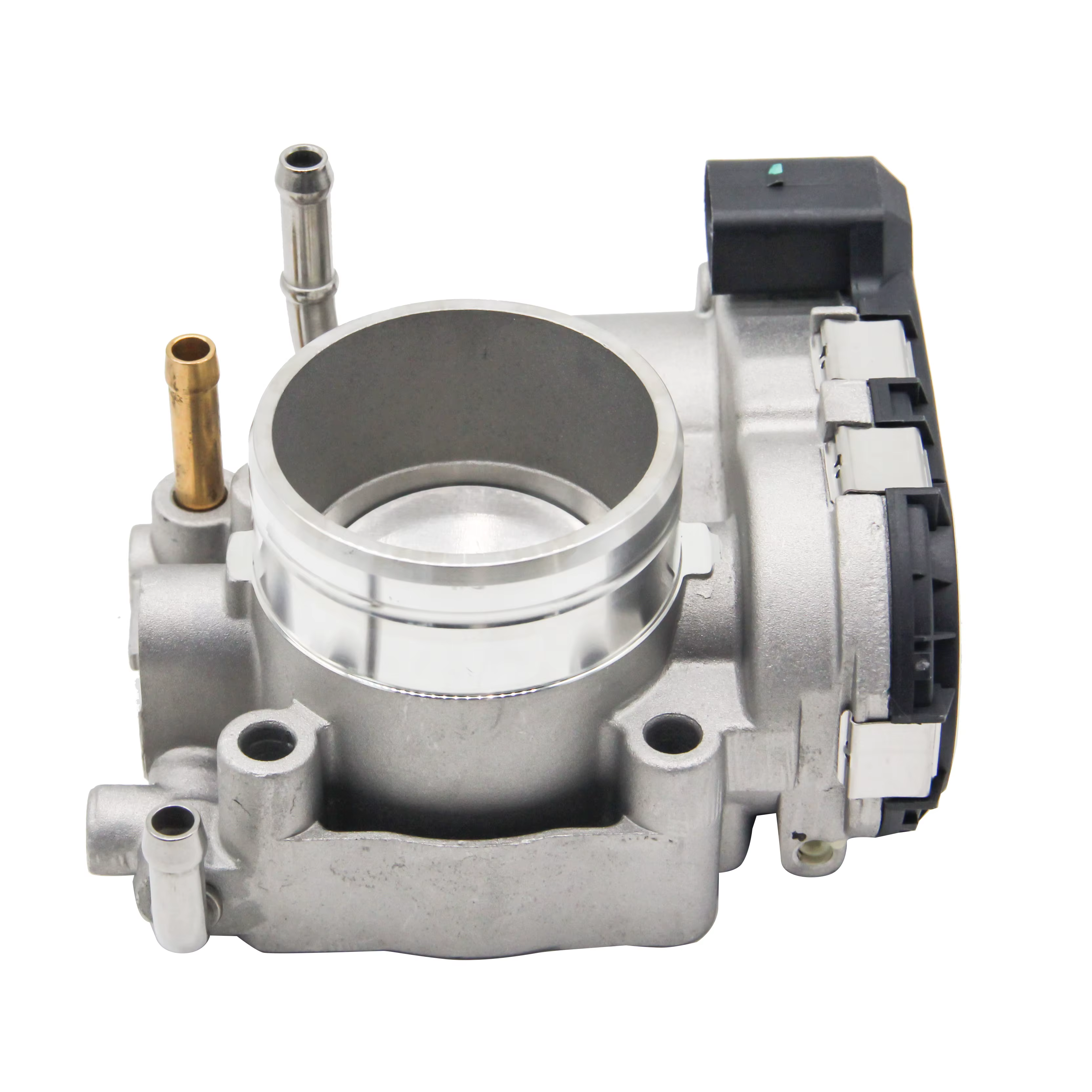
Throttle Body: Diagnosing Why Engine Idle Control Becomes Unstable
An engine that surges at stoplights, stalls unexpectedly, or hunts between 500 and 1,200 RPM without driver input is sending a clear signal: something in the air management system has lost precision. The throttle body — the component that regulates airflow into the engine based on accelerator pedal position — is frequently the root cause. Understanding what destabilizes throttle control separates a targeted repair from an expensive parts-swapping exercise.
The Mechanics of Throttle Body Instability
Carbon Buildup and Airflow Disruption
Carbon accumulation on the throttle plate and bore walls is the most common cause of unstable throttle body behavior. Engine blow-by gases carry oil vapor that deposits a sticky carbon layer on the plate edge and bore surface. The factory-calibrated narrow gap for minimum idle airflow becomes partially obstructed. The ECU compensates by commanding a wider throttle opening, but uneven deposits create erratic airflow the idle control system cannot stabilize. Symptoms typically appear first as a wandering cold idle, progressing to stalling when coming to a stop as deposits thicken.
Electronic Signal Faults and Sensor Drift
Electronic throttle body units use dual-redundant potentiometers for throttle position sensing — two independent signal paths that should agree within narrow tolerance. When one potentiometer track wears or develops a dead spot, the signals diverge. The ECU detects the discrepancy, triggers fault codes P0120-P0123 or P0220-P0223, and may enter limp-home mode. Intermittent faults are the hardest to diagnose: a sensor failing only at a specific temperature or throttle angle may pass static tests but cause reproducible drivability problems during road testing.
A Real-World Case: Workshop Diagnosis of Intermittent Stalling
A VW Golf with the 1.6L engine arrived at a workshop with intermittent stalling when approaching junctions — no check engine light, only a pending P0638 code. The technician cleaned the throttle body, performed an ECU adaptation reset, and returned the vehicle. The stalling returned within three days. On the second visit, an oscilloscope revealed a 300-millisecond voltage dropout on one potentiometer track at exactly 12% throttle opening — the position during deceleration approaching junctions. The ECU interpreted this as sensor failure and briefly commanded throttle closed, causing the stall. The faulty unit was replaced with a precision-manufactured throttle body from Sakes Auto Parts (Shanghai) Co., Ltd., whose assemblies undergo end-of-line calibration matching OE sensor output curves to eliminate exactly this type of signal deviation.
Why Cleaning Alone May Not Fix Electronic Throttle Bodies
Carbon cleaning restores airflow on mechanically sound units but cannot repair worn potentiometer tracks, failing throttle actuator motors, or damaged internal gears. Electronic throttle body assemblies contain a DC motor with plastic reduction gears that position the throttle plate. Over 100,000-150,000 kilometers, gear teeth develop backlash, causing the plate to overshoot its commanded position and oscillate as the ECU hunts for the correct angle. This mechanical wear produces the same surging idle symptom as carbon buildup but requires replacement rather than cleaning. Sakes Auto Parts manufactures replacement assemblies with reinforced gear materials that resist the wear patterns common to high-mileage VW and Audi engines.
Practical Diagnostic Sequence for Technicians
Begin with a borescope inspection of the throttle body bore and plate for carbon accumulation. Clean using aerosol intake cleaner and a soft brush — never abrasive tools that can scratch the bore surface. Reset ECU adaptation values after cleaning. If idle instability persists, graph both TPS signal voltages during a slow accelerator pedal sweep. Any voltage dropout, spike, or deviation between the two signal tracks indicates sensor wear requiring replacement. Measure throttle actuator motor resistance at the connector — values outside 1-5 ohms typically indicate a failing motor winding. A quality replacement from Sakes Auto Parts arrives pre-calibrated, reducing the risk of adaptation errors during installation.
Frequently Asked Questions
What are the first symptoms of a failing throttle body?
Slight RPM fluctuation at idle, hesitation during light acceleration, and occasional stalling when the clutch is depressed. A worn throttle body may trigger P0638 or P0121 fault codes — pending codes that have not yet illuminated the check engine light are common in early-stage failures.
Can I drive with an unstable throttle body?
Short-distance driving to a repair facility is possible, but continued driving risks stalling in traffic and may force the ECU into limp-home mode with severely reduced power. An unstable throttle body should be diagnosed and repaired promptly.
How often should a throttle body be cleaned?
Every 50,000-80,000 kilometers is a reasonable interval for preventive cleaning, particularly on direct-injection engines where throttle body carbon still accumulates. A dirty throttle body on VW and Audi platforms benefits from cleaning with the correct adaptation reset procedure afterward.
What fault codes indicate a throttle body problem?
P0120-P0123 (TPS circuit faults), P0220-P0223 (APP sensor correlation), P0638 (throttle actuator range), and P2100-P2110 (throttle actuator control circuit) all point to throttle body issues requiring further investigation.
Will a throttle body adaptation fix unstable idle?
If the root cause is carbon buildup, cleaning followed by adaptation reset often resolves the issue. If the throttle body sensor or motor has worn mechanically, adaptation cannot compensate and replacement is necessary. Sakes Auto Parts provides pre-calibrated replacements for VW and Audi applications.
How do I choose a quality replacement throttle body?
Look for units with end-of-line calibration data matching OE sensor output curves, reinforced internal gear materials, and doc