
 EN
EN
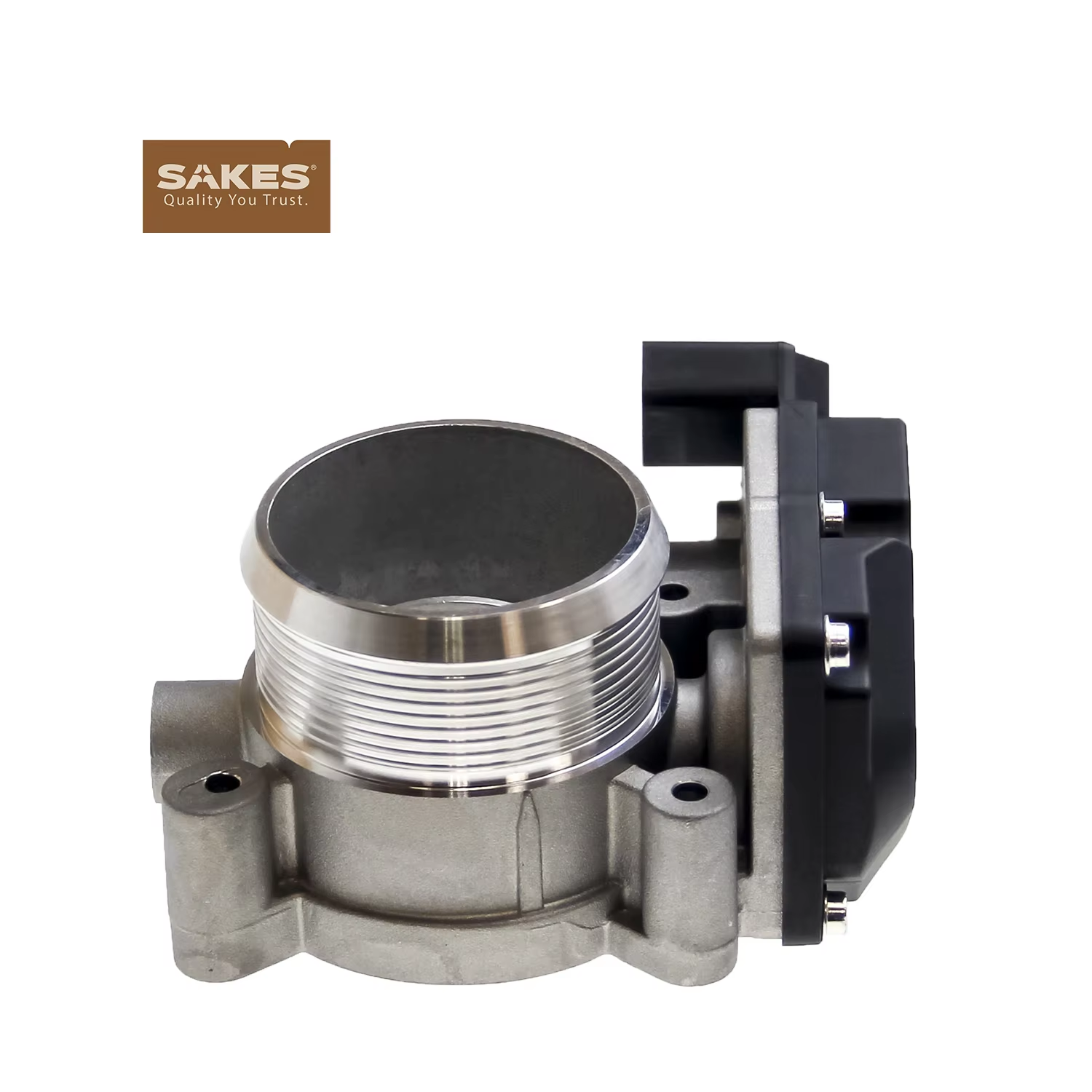
What Affects Throttle Body Response Speed?
The moment between pressing the accelerator and feeling the engine respond involves a chain of events: pedal position sensor reading, ECU torque demand calculation, throttle motor command, gear reduction rotation, and finally plate movement. In a properly functioning drive-by-wire system, this chain completes in 80–120 milliseconds—faster than the human nervous system can perceive. When throttle body response speed degrades, the driver notices it as hesitation, a rubber-band effect where engine response lags behind foot movement, or a surge when the plate finally catches up to the commanded position. Several factors, both mechanical and electronic, determine response speed.
The Mechanical Speed Limit: Motor and Gear Design
The throttle body motor is a DC motor purpose-built for high torque at low RPM. Its rotor inertia—the resistance to starting rotation—determines how quickly the motor begins turning when voltage is applied. Throttle body motors are designed with thin, lightweight rotors to minimize inertia, enabling approximately 80–100 milliseconds for a full 0–90 degree sweep. The gear reduction stage that follows converts motor RPM into plate movement, with typical reduction ratios ranging from 20:1 to 50:1 depending on the motor's torque characteristic. A higher reduction ratio amplifies torque at the expense of speed, and throttle body manufacturers balance this trade-off carefully to achieve fast response without sacrificing the holding torque needed to maintain position against intake manifold vacuum forces acting on the plate.
The return spring system provides both a fail-safe mechanism (closing the plate if power is lost) and the load against which the motor must work. Stronger return springs close the plate faster but slow the opening response by requiring more motor torque to overcome spring tension at the start of movement. The spring rate is calibrated so that plate closure from wide open to idle position completes within 150 milliseconds—fast enough that the engine decelerates without a perceptible delay on pedal release.
Electronic Factors: Signal Processing and Filtering
The ECU does not command the throttle plate to an exact angle on every control loop iteration. To prevent oscillation and premature motor wear from responding to every tiny pedal input fluctuation, the ECU applies signal filtering that averages pedal position over multiple samples. This filtering introduces a deliberate 10–30 millisecond delay—imperceptible under normal driving but potentially noticeable during rapid pedal movements in performance driving.
More significantly, the ECU's torque-based control strategy means the throttle command is not a direct translation of pedal position to plate angle. The ECU calculates a target torque, then determines the throttle angle, fuel quantity, ignition timing, and (on vehicles with variable valve timing) cam position that together achieve that torque. If any one of these parameters is being actively adjusted—for example, knock sensor activity retarding ignition timing—the throttle response may be damped because the torque target is being met through timing adjustment instead of airflow increase. This is why throttle body response speed can feel different from one drive cycle to another: the ECU's torque management strategy changes with engine temperature, knock history, and emissions control requirements.
The Carbon Buildup Variable
Carbon deposits on the throttle plate and bore do not just restrict idle airflow—they add physical resistance to plate movement. When carbon builds on the bore wall in the area where the plate edge sweeps, the plate must push through the deposits during opening and closing. This added drag slows response, particularly at small throttle openings where the motor is operating at lower torque. A throttle body with carbon buildup may take 150–200 milliseconds for a 10-degree opening movement that a clean unit completes in 80–100 milliseconds. The driver perceives this as an initial dead spot followed by a surge when the plate breaks free of the carbon resistance—the classic hesitation-surge pattern of a dirty throttle body.
The Electrical Supply Factor
The throttle body motor draws 2–4 amps during rapid movement from closed to wide open. If system voltage is low—during cranking, at idle with high electrical loads, or with a degraded battery—the available current to the throttle motor is reduced, and response slows proportionally. Throttle response that is noticeably slower during engine cranking or at idle with headlights and air conditioning running is a sign of a weak battery or charging system, not a faulty throttle body.
Case: Response Lag Traced to Carbon, Not Electronics
A vehicle developed a noticeable throttle response delay—approximately 0.5 seconds between accelerator input and engine response—at 90,000 km. The initial assumption was an electronic throttle control issue. Scanning revealed no fault codes and position sensor sweeps were smooth in live data. Physical inspection revealed carbon buildup on the bore wall approximately 0.8mm thick that was dragging against the plate edge during opening. Cleaning restored response speed to factory specification, eliminating the hesitation entirely. The vehicle's throttle body, a quality aftermarket unit equivalent to those supplied by manufacturers such as Sakes Auto Parts, remained mechanically sound after cleaning.
Frequently Asked Questions
How fast should a healthy throttle body respond?
A healthy electronic throttle body completes a full closed-to-wide-open sweep in approximately 80–120 milliseconds. Partial-opening movements (10–20 degrees) complete in 30–50 milliseconds. Any response visibly slower than the driver's foot movement warrants investigation.
Can throttle response be improved through ECU tuning?
Some ECU tuning maps reduce pedal signal filtering and allow more aggressive throttle opening for a given pedal input. However, the mechanical response speed of the throttle body motor and gear train is a physical limit that tuning cannot change.
Does throttle body brand affect response speed?
OE-quality aftermarket throttle bodies manufactured by suppliers like Sakes Auto Parts are designed to the same motor specifications, gear reduction ratios, and spring rates as original units, delivering equivalent response speed.
Can a failing battery cause slow throttle response?
Yes. Low system voltage reduces current available to the throttle motor, slowing plate movement. Throttle response that degrades specifically during engine cranking or with high electrical loads should prompt a battery and alternator test before condemning the throttle body.
Does throttle body response speed affect fuel economy?
Indirectly, yes. A slow-responding throttle body causes the ECU to command richer mixtures during transient throttle openings to compensate for the delayed air delivery. Restoring proper response speed reduces these enrichment events.
How can response speed be tested without specialized equipment?
With the engine off and ignition on, have an assistant press the accelerator pedal while listening at the throttle body. The plate should respond with an immediate, smooth whine that begins the instant the pedal moves. Any delay, hesitation, or grinding noise before movement begins indicates a problem.