
 EN
EN
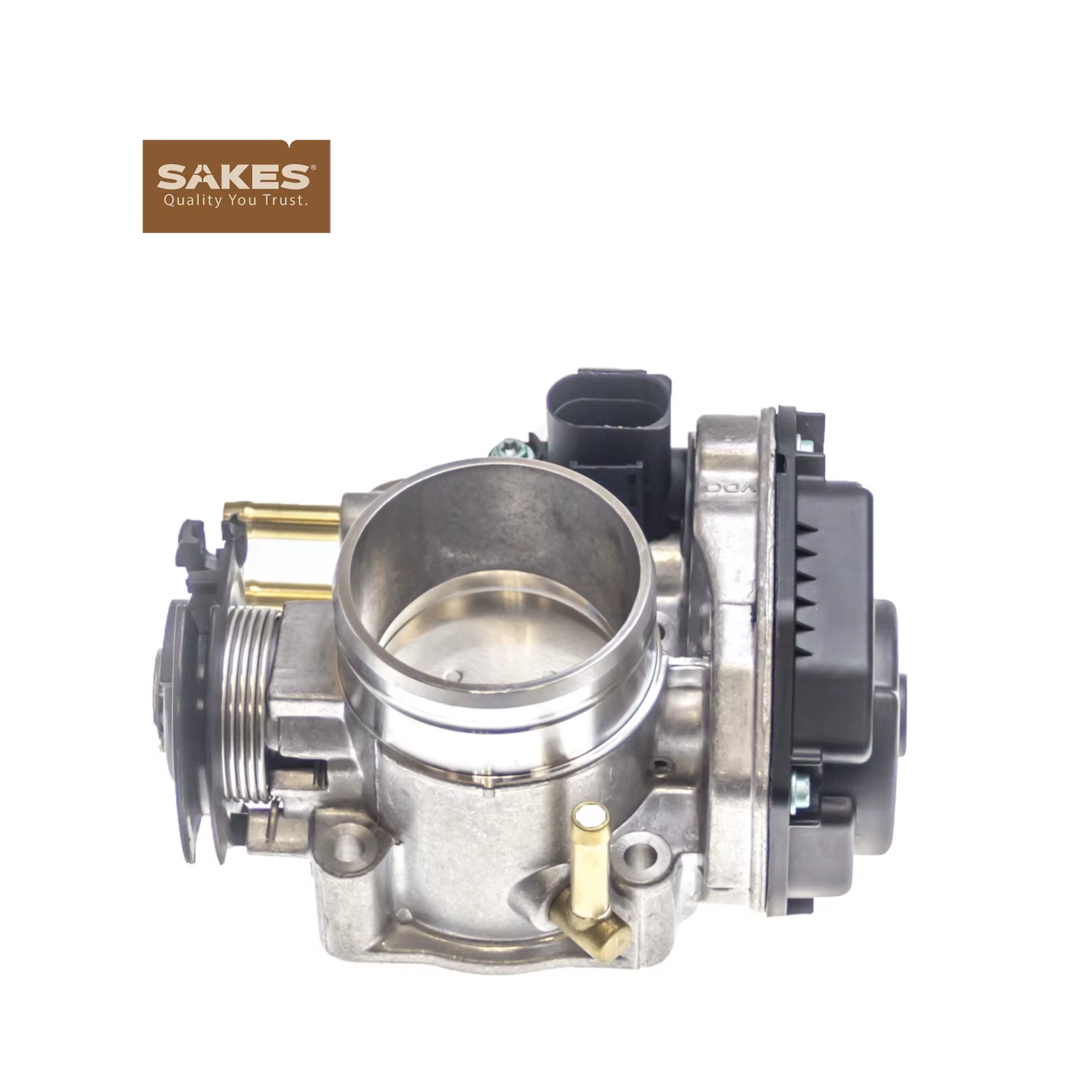
Throttle Body: A Practical Guide to ECU Adaptation and Relearning Procedures
Installing a replacement throttle body without performing the ECU adaptation is like fitting a new lock and expecting the old key to turn it. The engine control unit stores learned parameters — minimum idle position, sensor voltage offsets, and actuator response curves — that reflect the old component's wear characteristics. The new unit has different sensor baseline values, and the ECU must be told to forget the old data. Skipping this step produces rough idle, hesitation, and fault codes that falsely suggest the replacement part is defective.
Why ECU Adaptation Is Mandatory After Throttle Body Replacement
Adaptation teaches the ECU three critical parameters for the throttle body: the closed-throttle reference position — exact TPS voltage output when the plate is mechanically at rest; the actuator response curve — how the motor responds to PWM commands at different positions; and the idle airflow learning value — the minimum opening required to maintain target RPM. Without adaptation, the ECU uses stored values from the old component, potentially commanding a throttle opening too narrow, causing stalling, or too wide, causing high idle.
Calibration happens at the factory — the throttle body manufacturer sets sensor curves during end-of-line testing. Adaptation happens in the vehicle — the ECU learns how that specific unit interacts with the particular engine. A pre-calibrated unit from Sakes Auto Parts (Shanghai) Co., Ltd. arrives with sensor outputs matching OE specifications, but the vehicle's ECU still requires adaptation. Pre-calibration reduces adaptation time and minimizes failure risk, but does not eliminate the procedure requirement.
Step-by-Step Adaptation Procedures
VW/Audi Group Vehicles (VCDS Method)
For the core application range of Sakes Auto Parts throttle body products, connect VCDS and select Engine Electronics (01). Navigate to Basic Settings (04), select Group 060 for cable-throttle vehicles or Group 098 for electronic throttle. With ignition on and engine off, initiate adaptation. The scan tool displays "ADP RUN" while the ECU drives the throttle plate through its full range, measuring sensor voltages at multiple positions. When "ADP OK" appears — typically within 30 seconds — adaptation is complete. Never touch the accelerator pedal during this process, as pedal movement interrupts the cycle.
Generic OBD-II Adaptation Methods
Vehicles without VAG-specific diagnostic access require manual relearn. After installing the throttle body, cycle the ignition on for 3 seconds and off for 10 seconds — three times without starting the engine. Start the engine and allow it to idle without any accessory loads for 10-15 minutes while the ECU learns the new idle position. RPM fluctuation is normal during this period. After the idle stabilizes, drive the vehicle through varied throttle conditions for 10-15 minutes, including steady cruising at 80-100 km/h. The combination of idle learning and part-throttle learning completes adaptation for most vehicles.
Common Adaptation Problems and Solutions
An adaptation that fails — displaying "ERROR" or "NOT OK" — typically indicates: the throttle body connector is not fully seated (remove and reinstall with an audible click); battery voltage is below 12.4V (charge or connect a maintainer); or stored fault codes in other systems are preventing adaptation (clear all codes and retry). If adaptation repeatedly fails, verify the replacement throttle body part number matches the vehicle application. Sakes Auto Parts provides application-specific assemblies with verified part number cross-references for VW and Audi models.
A Real-World Case: Post-Installation High Idle
A VW Tiguan owner replaced the throttle body himself using a quality aftermarket unit but did not perform adaptation. The engine idled at 1,100 RPM instead of 750 RPM. Frustrated, he assumed the part was defective. A mobile diagnostic technician performed the Group 060 adaptation procedure via VCDS in under 60 seconds. The idle immediately dropped to 750 RPM and remained stable. The throttle body — sourced from Sakes Auto Parts — was functioning perfectly; the only missing step was the ECU relearn. Electronic throttle body installation requires the software handshake between the component and ECU as critically as the physical mounting bolts.
Practical Workshop Integration
Shops that include printed adaptation confirmation in service documentation reduce post-service comebacks. After completing the throttle body adaptation, screenshot the scan tool showing "ADP OK" status or note the completion timestamp and fault-code-free condition. This documentation proves the procedure was performed correctly, protecting against claims of improper installation if unrelated problems arise later. Sakes Auto Parts supports their throttle body products with technical documentation including adaptation procedure references for common vehicle applications.
Frequently Asked Questions
Can I skip ECU adaptation after installing a new throttle body?
No. The ECU stores learned parameters from the old component. Without adaptation, idle quality and throttle response will be incorrect. A replacement throttle body from any manufacturer requires this procedure.
How long does a throttle body adaptation take?
Automated via VCDS: 30-60 seconds. Manual relearn including ignition cycling and drive-cycle learning: approximately 25-30 minutes. Sakes Auto Parts throttle body units are pre-calibrated to streamline adaptation.
Why does my adaptation keep failing with an error?
Common causes include low battery voltage below 12.4V, improper connector seating, stored fault codes in other systems, or incorrect part number. Verify connections, charge the battery, clear codes, and retry. A quality throttle body should adapt successfully under correct conditions.
Do I need a VCDS tool or will a generic scanner work?
VCDS or equivalent VAG-specific tools provide the most reliable adaptation for VW/Audi vehicles. Some generic scanners support throttle adaptation, but compatibility varies. A properly calibrated throttle body will respond to any correctly executed procedure.
What happens if the battery dies during adaptation?
Loss of power may corrupt ECU learned values. Reconnect power, clear any resulting fault codes, and restart the adaptation. A throttle body that fails adaptation due to power loss is not defective — the procedure simply needs to be repeated.
Will a pre-calibrated throttle body still need adaptation?
Yes. Pre-calibration ensures sensor outputs match OE specifications, but the ECU must still learn how that specific unit interacts with the engine. A pre-calibrated throttle body from Sakes Auto Parts reduces adaptation time but does not eliminate the requirement.