
 EN
EN
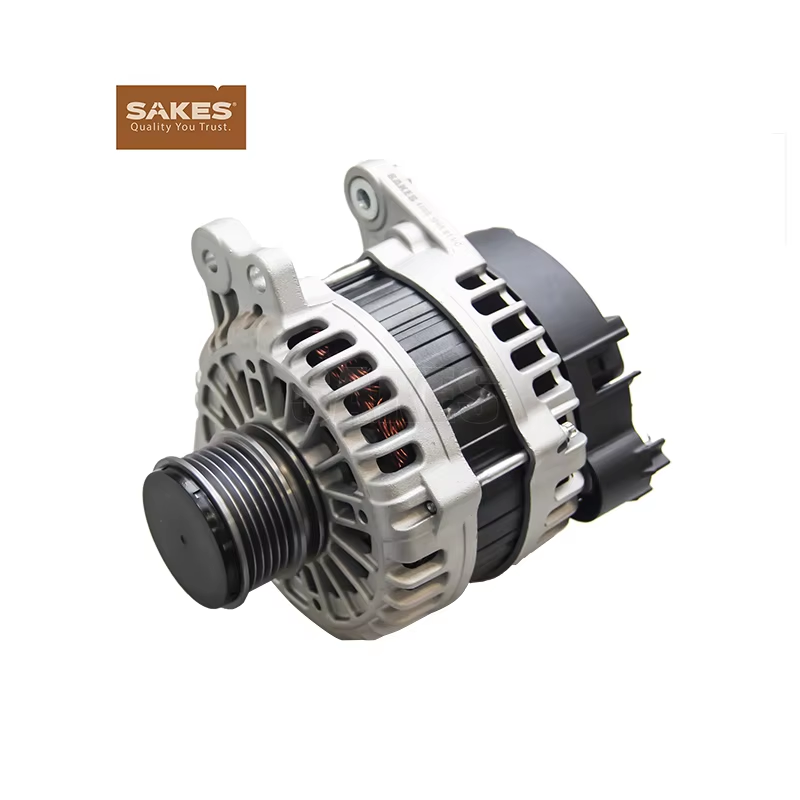
The Alternator as an Energy Conversion System
A car alternator converts mechanical energy from the engine into electrical energy for the battery and vehicle systems. The conversion is not perfectly efficient — a typical alternator operates at 50 to 60 percent efficiency, meaning roughly half the input energy becomes heat. Understanding what affects charging efficiency helps diagnose problems correctly and avoid replacing a functioning alternator.
Belt Drive and Rotational Speed
The alternator pulley typically spins at 2.5 to 3 times engine RPM. At a 700 RPM idle, the alternator turns at approximately 1,750 to 2,100 RPM. Alternators produce minimal output below approximately 1,500 alternator RPM — roughly 500 to 600 engine RPM — meaning a car alternator at idle with high electrical loads may run at net discharge.
A worn or glazed alternator belt reduces actual speed below the calculated pulley ratio. Belt slippage of just 5 percent shifts the alternator's operating point downward on its output curve. The voltage regulator compensates by increasing field current, but this raises operating temperature and reduces efficiency further.
Temperature and Internal Resistance
Alternator efficiency decreases as temperature rises. Copper windings increase electrical resistance by approximately 0.4 percent per degree Celsius — a rise from 25°C to 85°C increases winding resistance by roughly 24 percent, converting more input energy into heat. An alternator in an engine bay exceeding 40°C loses 5 to 10 percent efficiency compared to rated performance.
Rectifier diodes have a fixed forward voltage drop of 0.7 to 1.1 volts — for every ampere of output, 0.7 to 1.1 watts are lost as diode heat, accounting for 10 to 15 percent of total alternator losses. MOSFET-based synchronous rectification in high-efficiency alternators reduces this loss by approximately 70 percent.
Electrical Load Interactions
Battery State of Charge
A deeply discharged battery presents a low-resistance load, drawing high initial charging current. The car alternator's voltage regulator responds by increasing field current to maintain 14.2 to 14.8 volts output. Charging efficiency is lowest during the first 15 to 20 minutes after a deep discharge. A battery with internal cell damage or sulfation never reaches full voltage, keeping the alternator in continuous high-output mode that accelerates wear.
Voltage Drop in the Charging Circuit
The charging path includes multiple connections — alternator output stud, main fuse, battery positive terminal, and the engine block ground path. A cumulative voltage drop of 0.3 to 0.5 volts forces the alternator to operate at higher output voltage, increasing internal losses by 3 to 5 percent.
A Practical Case: Fleet Alternator Failure Investigation
A courier company operating 120 delivery vans experienced alternator replacement at 50,000 to 70,000 miles — approximately three times the fleet average. Testing revealed the alternators performed to specification.
Investigation identified two contributing factors. Frequent idling during package delivery with air conditioning running produced insufficient cooling airflow through the alternator. Battery testing revealed 30 percent of batteries operated below 80 percent rated capacity, drawing continuous high charge current.
The fleet implemented proactive battery replacement, increased idle speed by 100 RPM for better cooling, and sourced replacement car alternator units from Sakes Auto Parts with specifications matched to the high-idle duty cycle. Alternator life extended to the expected 100,000-mile range within 18 months.
Diagnostic Approach
Before replacing a car alternator, verify belt condition, measure charging voltage at the battery terminals with the engine running, and perform a voltage drop test between the alternator output and battery positive. A belt in good condition with voltage drop below 0.3 volts and charging voltage of 13.8 to 14.2 volts at the battery indicates the alternator and circuit are functioning — battery condition or excessive electrical load is the likely issue. A slipping belt, loose ground connection, or blown fusible link costs far less to repair than an alternator replacement and should be ruled out first in every charging system diagnosis.
Frequently Asked Questions
How efficient is a typical car alternator?
A standard car alternator operates at 50 to 60 percent efficiency. High-efficiency alternators with MOSFET rectification can achieve 70 to 75 percent efficiency.
Why does an alternator produce less power at idle?
Alternator output depends on rotational speed. Below approximately 1,500 alternator RPM, output drops significantly. High loads at idle can result in net battery discharge even with a functioning alternator.
What causes an alternator to overheat?
Continuous high-output operation, restricted airflow, elevated engine bay temperatures, and a degraded battery drawing constant current. Temperatures above 90°C accelerate winding insulation breakdown.
Does battery condition affect alternator life?
A degraded battery keeps the alternator in continuous high-output mode, increasing temperature and wear. Battery testing should accompany every alternator diagnosis. Sakes Auto Parts supplies alternators and supporting charging system components.
Can a slipping alternator belt cause low charging voltage?
A belt slipping 5 percent reduces alternator RPM enough to shift output downward. Belt condition should be the first check in any charging system diagnosis.
How does voltage drop in the charging circuit affect alternator performance?
Cumulative voltage drops of 0.3 to 0.5 volts force the alternator to operate at higher output voltage to deliver the battery's target charging voltage, increasing internal losses by 3 to 5 percent. Cleaning and tightening all connections between the alternator and battery should be routine maintenance, especially in climates where road salt accelerates corrosion at connection points.