
 EN
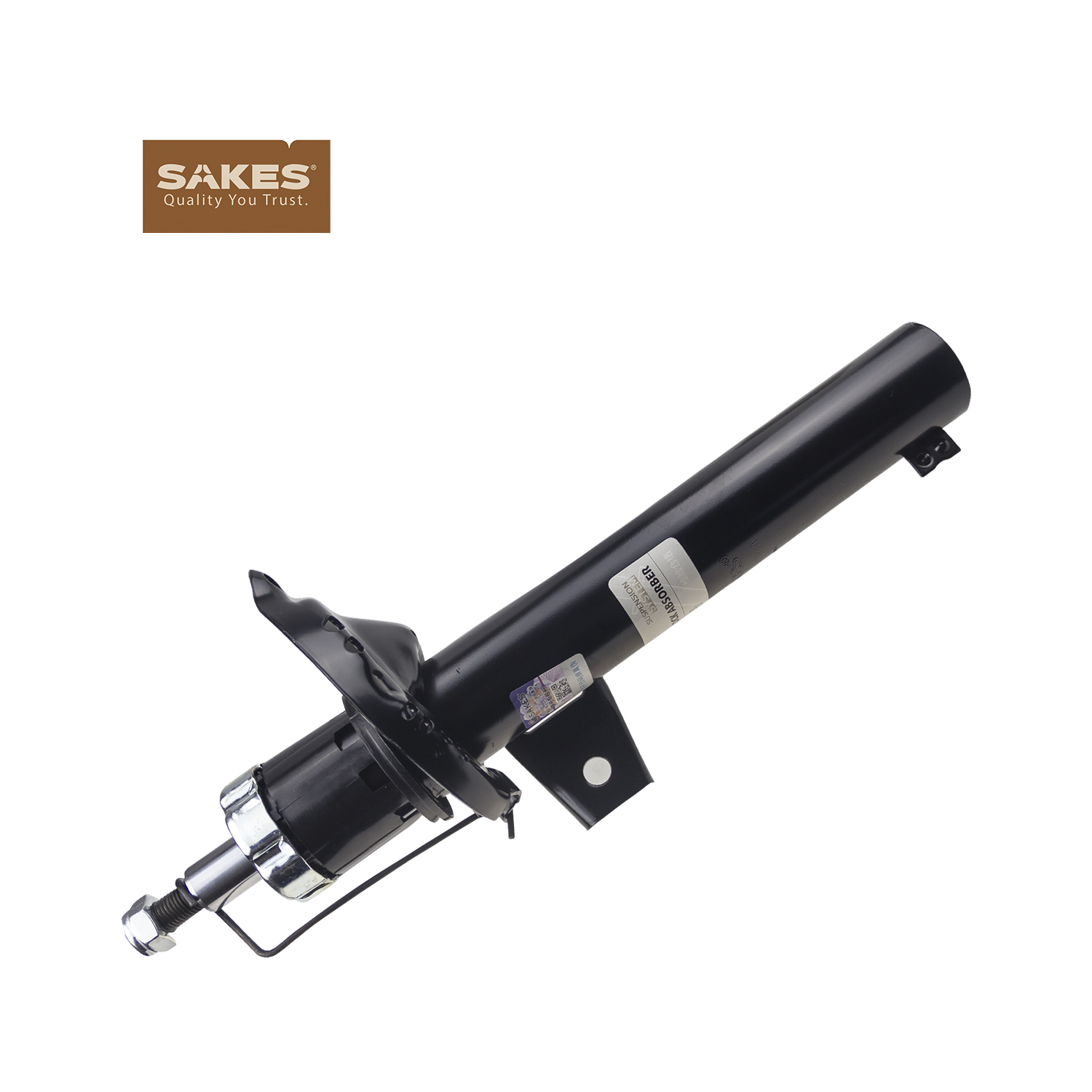
How Piston Velocity Shapes Shock Absorber Damping Force
Nonlinear Damping Curves: Why Force Isn’t Proportional to Velocity
Damping force in a shock absorber does not scale linearly with piston velocity. Instead, it follows a nonlinear force-velocity curve dictated by how hydraulic fluid navigates internal restrictions. At very low shaft speeds—typically below 1 in/s (25 mm/s)—a small bleed orifice allows fluid to bypass the main piston valving, generating modest damping force ideal for fine body-motion control and maintaining tire contact over minor road texture. As piston velocity increases, pressure across the piston rises, progressively deflecting spring-loaded shim stacks or disc valves. This dynamic expansion of effective flow area causes damping force to climb steeply at first, then taper—a hallmark of digressive behavior. High-speed bypass or blow-off circuits further flatten the curve during sharp impacts, preventing excessive peak force. A purely linear damper would produce force strictly proportional to speed, but no production or performance shock absorber operates this way. Engineers therefore tune valve geometry—not just fixed orifice size—to map damping response precisely to vehicle weight, spring rate, and intended use. Because piston velocity is the primary physical input driving all hydraulic resistance, dyno testing measures damping force across a representative range of shaft speeds, not at isolated points.
Valving Design and Fluid Flow Dynamics in Real-World Shock Absorber Systems
Valving design governs how piston velocity translates into damping force through controlled fluid displacement. In practice, oil flows through three principal paths: a low-speed bleed circuit, a mid-range piston-mounted valve stack, and a high-speed bypass or blow-off system. Unlike fixed-orifice restrictors, modern valving uses deflectable shims or discs whose effective area changes with pressure—creating variable, load-responsive flow resistance. Twin-tube dampers add a base valve that works in series with the piston valve to regulate compression flow; monotube designs rely solely on piston valving and a high-pressure nitrogen charge to separate oil and gas. Temperature also plays a critical role: as fluid heats under repeated use, viscosity drops, which can erode damping force unless valve design compensates. Real-world tuning therefore balances bleed size, shim thickness, preload, and blow-off thresholds against the expected piston velocity envelope. A well-tuned valve stack limits peak force during large impacts while preserving responsiveness during slower weight transfer—striking the balance that defines functional, predictable shock absorber behavior.
Low-Speed vs High-Speed Damping in Shock Absorber Performance
Defining Speed Thresholds: 1–4 in/s vs >6 in/s Across OEM and Performance Shock Absorber Applications
“Low-speed” and “high-speed” damping refer exclusively to piston velocity inside the damper—not vehicle speed. Industry-standard thresholds define low-speed damping as occurring between 1–4 in/s (25–102 mm/s), where the damper manages gradual body motions like roll in corners, pitch under braking, and squat during acceleration. High-speed damping begins above ~6 in/s (152 mm/s), responding to abrupt inputs such as potholes, curbs, and expansion joints. OEM dampers typically prioritize ride comfort with softer low-speed valving, while performance units often increase low-speed firmness for body control—but incorporate high-speed blow-off to avoid harshness on sharp impacts. Common dyno sweep speeds include 0.1, 0.3, and 0.52 m/s (~4, 12, and 20 in/s), though velocities below 0.05 m/s (2 in/s) are frequently uncharacterized. That gap can mask undesirable harshness from micro-texture inputs, underscoring why threshold selection directly shapes real-world behavior across both OEM and motorsport applications.
How Low-Speed Damping Governs Ride Comfort, Body Control, and Tire Contact
Low-speed damping disproportionately influences ride comfort and mechanical grip because it regulates the suspension’s response to everyday, low-amplitude inputs. Excessive low-speed compression damping makes a vehicle feel stiff and disconnected on smooth roads, resisting natural body motion and dulling driver feedback. Conversely, insufficient low-speed rebound damping permits excessive body float and wallow—especially mid-corner—reducing stability and delaying weight transfer. Proper low-speed rebound keeps the tire contact patch loaded during roll and pitch transitions, while still allowing rapid wheel movement over small bumps and joints. A widely used diagnostic benchmark is damping force at 0.025 m/s (1 in/s): if a passenger car damper exceeds 200 N at this speed, initial damping is likely too aggressive. The rod cannot react quickly enough, transmitting road harshness directly into the chassis—degrading comfort and reducing tire contact on broken pavement.
Rebound and Compression Balance in Shock Absorber Tuning
The 60/40 Rule and Its Exceptions: When Asymmetric Damping Improves Handling Stability
Many tuners begin with a 60/40 rebound-to-compression force bias—assigning roughly 60% of total damping effort to rebound and 40% to compression. This asymmetry helps manage spring energy release without overly resisting bump inputs, improving stability and predictability. However, this ratio is a starting point—not a universal rule. On smooth track surfaces, stiffer compression damping can sharpen turn-in and reduce brake dive, while slightly softer rebound allows faster weight transfer and improved traction on corner exit. On rough pavement, excessive rebound damping risks pack-down, where the shock fails to extend fully before the next bump, causing the suspension to bottom progressively and lose contact. In those cases, a more balanced or even compression-biased curve often improves tire contact and composure. The optimal split depends on empirical factors—vehicle mass distribution, spring rate, anti-roll bar stiffness, and surface profile—not theoretical formulas.
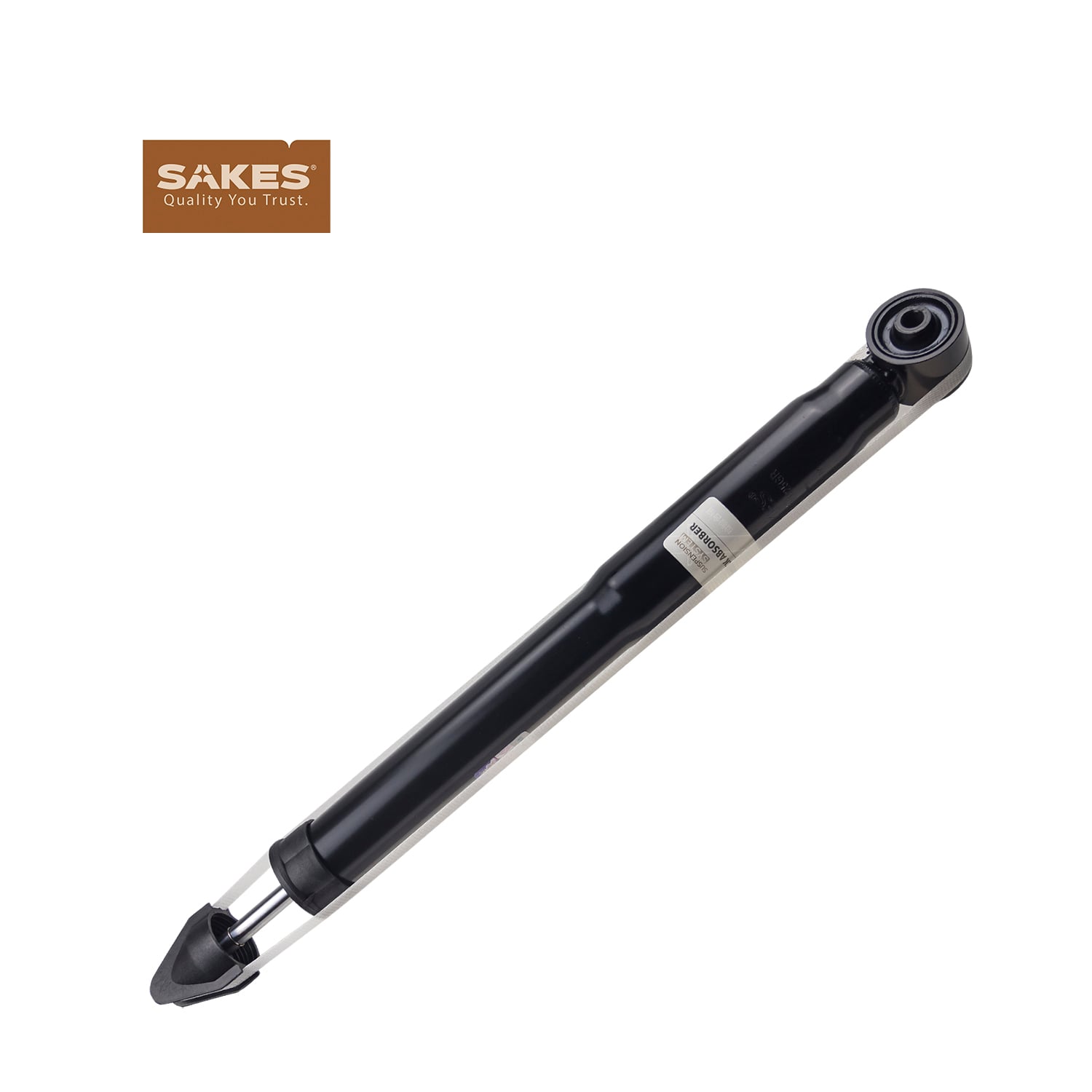
Spring Rate and Shock Absorber Damping Interaction
Over-Damping with Stiff Springs: Trade-Offs in Track-Focused Shock Absorber Setups
Stiff springs reduce total suspension travel, meaning less rebound damping is needed to control normal road inputs. Yet track-focused setups often over-damp—particularly in rebound—to manage rapid weight transfer and stabilize aerodynamic platforms. The trade-off emerges on bumpy corners: excessive compression damping prevents the wheel from tracking pavement quickly enough, reducing mechanical grip; excessive rebound then holds the tire in compression after impact, causing momentary loss of contact. This can trigger jacking down, where repeated bumps progressively lower the ride height until travel is exhausted. Under endurance conditions, rising fluid temperature further degrades damping consistency. On smooth circuits, over-damping enhances transient response and turn-in precision—but may induce nervousness, since damper force responds to piston velocity, not suspension position. For example, high rebound force after curb strikes delays spring return, unloading the inside tire longer and shifting mid-corner balance. Qualifying setups accept this compromise for one-lap pace; race setups often reduce rebound damping slightly to preserve tire life, driver consistency, and long-run stability. Ultimately, the most effective track tuning matches damping force not to spring stiffness alone, but to actual wheel frequency and the vehicle’s dynamic operating envelope.
FAQ
What is piston velocity in shock absorbers?
Piston velocity refers to the speed at which the shock absorber’s piston moves within its tube as the suspension reacts to road inputs.
Why is damping force nonlinear?
Damping force is nonlinear because the hydraulic fluid navigates internal restrictions like bleed orifices and shim stacks that vary dynamically with pressure, producing digressive and load-responsive damping characteristics.
What is the difference between rebound and compression damping?
Rebound damping controls the extension of the shock absorber after compression, while compression damping regulates the absorption of impacts and downward movement.
Why are low-speed and high-speed damping thresholds important?
Low-speed damping affects ride comfort and everyday body control, while high-speed damping manages sharp impacts like potholes and curbs, ensuring both stability and driver feedback.
How do stiff springs interact with shock absorber damping?
Stiff springs reduce travel, requiring adjusted damping levels to effectively manage rapid weight transfer, track handling, and mechanical grip.